


Top Journal Endorsement (Adv. Sci.), Dual Breakthrough in Drugs and Medical Devices! A New Era for Dry Eye Treatment Has Begun.
Dry eye disease is becoming an 'invisible concern' for national health in China, affecting 2 to 3 out of every 10 Chinese people. This high prevalence, which aligns with the 21.0%-52.4% rate disclosed in the "Chinese Expert Consensus on Clinical Diagnosis and Treatment of Dry Eye (2024)", makes it the 'most common disease' in ophthalmology clinics and has created a multi-billion yuan market opportunity.
Under the dual pressures of high-stress lifestyles and the digital era, prolonged use of smartphones and tablets reduces blinking and accelerates tear evaporation. Coupled with ongoing changes in visual environments, the prevalence of dry eye disease is rising year by year, now affecting all age groups from adolescents to the elderly.
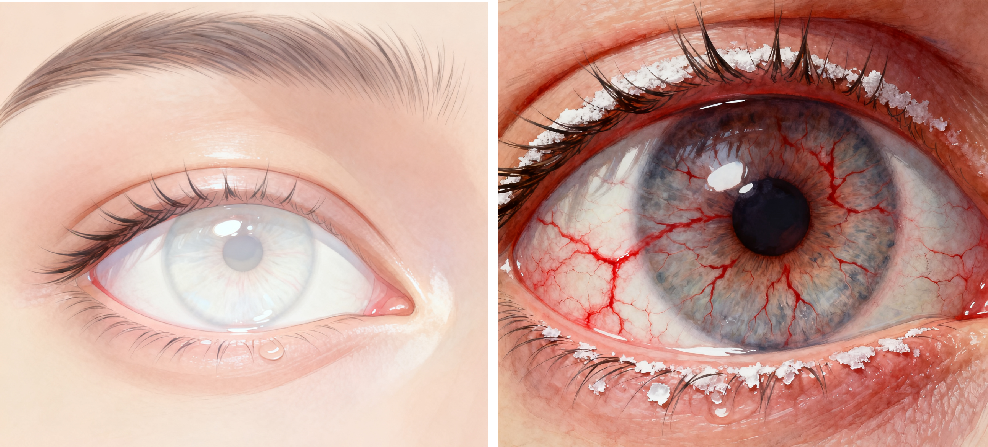
Although staged treatment plans have been proposed in the 2023 AAO guidelines and others, basic treatment still heavily relies on symptomatic measures such as eye drops, lacking therapeutic drugs that target the underlying causes.
Commonly used clinical medications include artificial tears, such as sodium hyaluronate eye drops, to supplement tears, and immunosuppressants like cyclosporine A to regulate inflammation.
Some patients with moderate to severe conditions may use glucocorticoids or autologous serum eye drops. However, these drugs mainly aim to alleviate symptoms such as dryness and foreign body sensation and cannot completely reverse core pathological issues like tear film damage or meibomian gland dysfunction.
More concerning is that traditional eye drops have a drug absorption rate of less than 5%, making it difficult to fully exert their efficacy. Combined with the shortage of symptomatic medications, this industry pain point means that the huge clinical demand has yet to be fully met.
Technology Barrier Type: 'Smart Missile' Certified by Top Journals — Directly Targeting Dry Eye Disease
On April 24, 2025, the internationally renowned journal Advanced Science featured on its cover the research on ROS-responsive microneedle patches (CE-MN) conducted by the joint team of Aier Eye Hospital and Nankai University, marking that China's original breakthrough in targeted drug delivery technology for dry eyes has gained international recognition.
This technology precisely targets the high-value niche market of dry eye associated with Sjögren's syndrome (SSDE). As a chronic autoimmune disease, the core characteristics of SSDE are 'predominantly female occurrence and progressive lacrimal gland atrophy.'
The degree of tear secretion impairment in these patients is much higher than in ordinary dry eye, and existing treatments have critical clinical shortcomings—traditional cyclosporine eye drops are affected both by dilution in tear fluid and by the corneal barrier, resulting in an ocular drug absorption rate of less than 5%, with an effective dose reaching the diseased lacrimal glands being negligible.
At the same time, ongoing inflammation-induced lacrimal gland atrophy further exacerbates treatment difficulties, ultimately forming a clinical unmet need characterized by 'urgent demand but lack of solutions.' To address this core pain point, the CE-MN technology establishes a dual-action system of 'perilacrimal gland targeting and ROS smart response,' with its core competitiveness focused on three irreplaceable technological barriers:
1. Innovative delivery pathway: Through minimally invasive drug administration around the lacrimal gland, the physiological barriers of the ocular surface are directly bypassed, significantly increasing drug concentration at the diseased site, fundamentally solving the core problem of conventional eye drops 'not reaching the lesion.'
2. Intelligent release mechanism: Leveraging the significantly elevated reactive oxygen species (ROS) in the inflammatory microenvironment of SSDE patients, the boronate ester bonds on the drug carrier are cleaved, achieving 'precise drug release at the site of inflammation,' which both avoids drug wastage and reduces potential side effects in non-target areas.
3. Compound synergistic design: Simultaneously incorporating cyclosporine (the core anti-inflammatory component) and epigallocatechin gallate (EGCG, a tissue repair component), creating an 'anti-inflammatory and repair' synergistic effect that addresses the pathological cascade of SSDE from 'inflammatory damage to gland atrophy,' offering clinical advantages over single-component treatments.
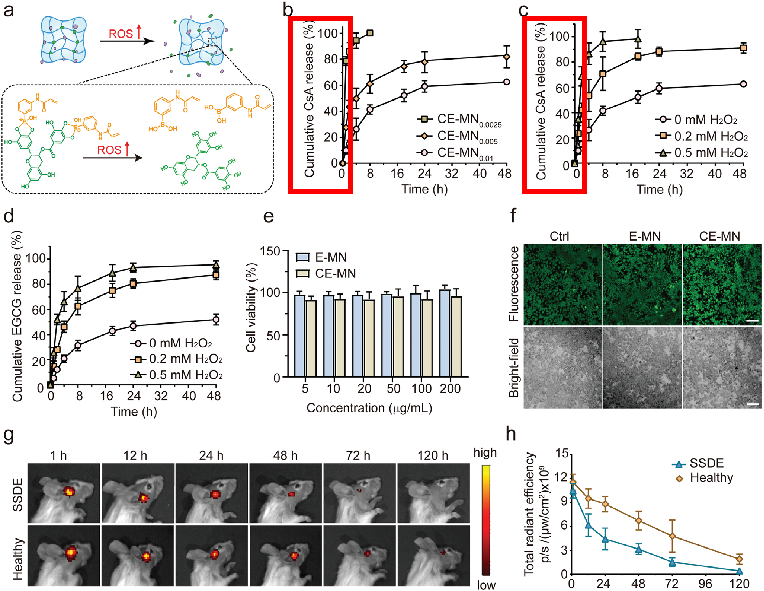
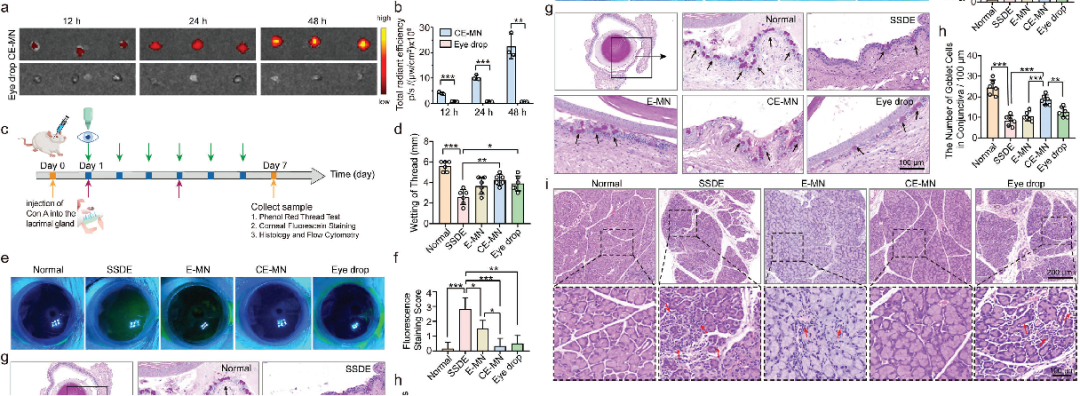
Experimental data show that this patch can achieve long-lasting drug delivery in the lacrimal gland for over 48 hours, significantly extending the effect window compared with traditional eye drops.
In a dry eye mouse model, it not only significantly alleviates lacrimal gland inflammation but also effectively improves tear secretion function, with therapeutic effects that are overall superior to traditional eye drops.
In this research collaboration, Nankai University and Aier Eye Hospital have a clear division of labor and work closely together. The team led by Guo Shutao from the College of Chemistry at Nankai University serves as the core R&D force, leading key technological breakthroughs, including designing a ROS-responsive microneedle matrix (utilizing EGCG and 3APBA to form ROS-sensitive boronate ester bonds), screening low-viscosity NVP monomers to address the challenge of hydrophobic drug loading, and constructing a temperature-sensitive PNIPAM-B separable substrate, which provides core technological support for the smart drug release and comfortable use of microneedle patches.
Aier Eye Hospital leverages its clinical and translational advantages, led by Professor Huaxia’s team from Tianjin University Aier Eye Hospital, providing clinical pathological insights into SSDE, establishing and validating dry eye mouse models (including tear secretion tests, corneal fluorescein staining, etc.), and ensuring research implementation and data support through the Aier Eye Hospital Research Institute and the postdoctoral workstation.
Together, the two parties achieve the translation from 'laboratory technology' to 'clinical treatment solutions,' promoting breakthroughs of novel microneedle patches in the treatment of SSDE.
Market monopoly: The world's only MGD specialty drug, ending the treatment gap for MGD
Hengrui Medicine's subsidiary Chengdu Shengdi Pharmaceuticals obtained approval in 2025 for its perfluorohexyl octane eye drops, entering the larger meibomian gland dysfunction (MGD)-related dry eye market with a 'globally unique' market positioning, demonstrating strong commercialization potential.
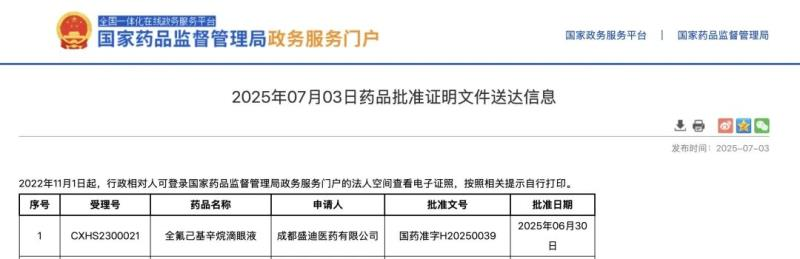
NMPA Approval Letter
Perfluorohexyl octane (abbreviated as F6H8) is a molecule that has long existed, and its original overseas product has not become a 'blockbuster' drug. This 'non-popular' characteristic actually created a rare opportunity for Hengrui Medicine in 2019 to acquire exclusive rights in China from Novaliq.
What is truly worth learning from in the industry is the development concept of this product—'old molecule, new use, breakthrough in formulation technology'—which precisely targets the large unmet market of meibomian gland dysfunction (MGD)-related dry eye.
It's important to note that MGD-related dry eye accounts for 69%-86% of all dry eye patients, but before this product was launched, the field had long relied only on physical therapies and lacked targeted therapeutic drugs, leaving market demand largely unmet.
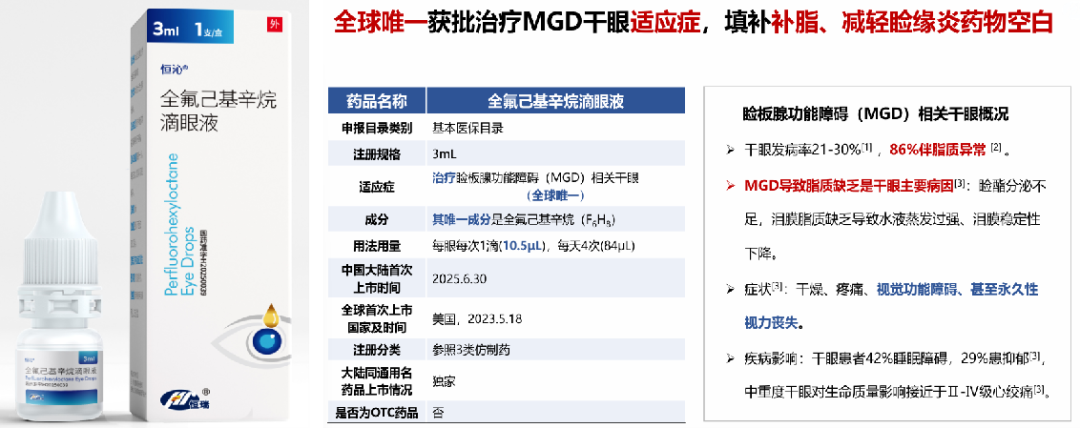
The core competitiveness of this product stems from leveraging the EyeSol® anhydrous drug delivery technology platform to achieve a 'formulation-level innovation' for F6H8 molecules. It transforms a single component, perfluorohexyl octane, into a formulation that is free of water, oils, surfactants, and preservatives, addressing the two major pain points of traditional eye drops: poor stability and eye irritation.
Three practical benefits brought by this innovation:
1. Rapid moisture-locking protection: The drug solution has extremely low surface tension, allowing it to quickly spread on the ocular surface and form a 'supramolecular protective film,' directly inhibiting excessive tear evaporation.
2. Cause-specific treatment: Thanks to its 'amphiphilic nature,' it not only replenishes the lipids needed by the tear film but also unclogs blocked meibomian glands, upgrading the treatment from a traditional 'symptom-focused hydration' approach to a 'cause-specific therapy.'
3. Improved medication adherence: Its 'anhydrous and preservative-free' characteristics overcome the limitation of using standard eye drops within 4 days of opening, significantly reducing patient concerns about medication, especially suitable for long-term use.
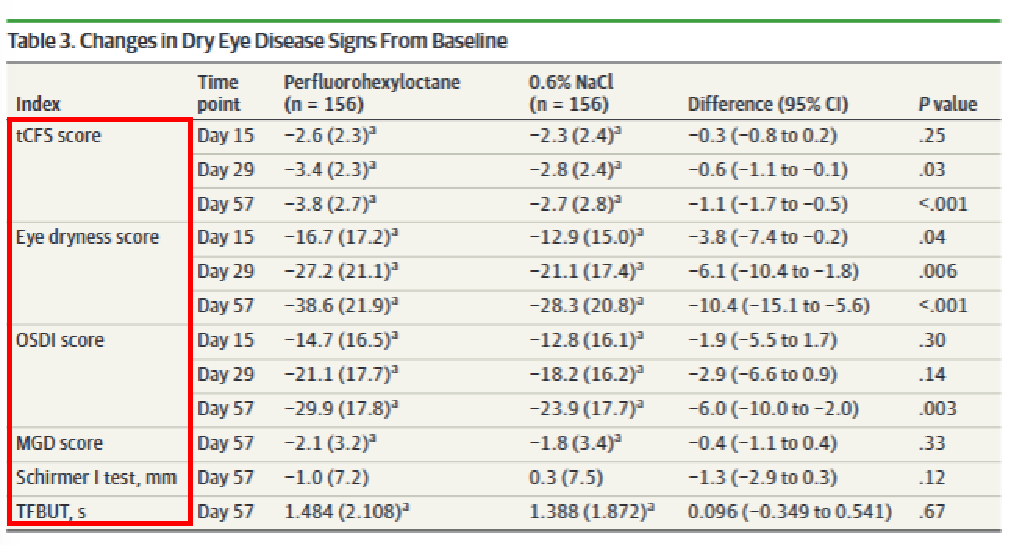
Phase III clinical data provide strong support: Clinical research (NCT05515471) showed that in terms of efficacy: symptoms of dry eyes were significantly reduced after 2 weeks of use (VAS), corneal damage improved after 29 days, and the efficacy persisted until the 57-day study endpoint.
In terms of safety: the incidence of allergic conjunctivitis was only 1.4%, with no serious adverse events. Moreover, it breaks the 4-week post-opening usage limit, further enhancing patient compliance.
As this product gradually gains traction in the domestic market, its industry impact is worth anticipating: referring to the 16.17% compound annual growth rate of China’s dry eye drug market, it is highly likely that the product's annual sales could reach several hundred million yuan, and it is expected to drive more pharmaceutical companies to follow suit in research and development.
However, this kind of "following" will not be a simple molecular structure imitation, but more likely focus on the optimization and adaptation of "anhydrous formulation technology"—competing around core needs such as "further enhancing stability, reducing irritation, and extending usage cycles," promoting technological iteration across the entire MGD treatment field.
Introduction Zvast Biotechnology Dry Eye Model — Scopolamine/ Benzalkonium Chloride-Induced Mouse Dry Eye Model
The scopolamine-induced model focuses on dry eye with insufficient tear secretion. Its modeling principle is based on the drug's interference with neural regulation — as a peripheral anticholinergic drug, scopolamine can competitively inhibit the M receptors in the lacrimal gland, blocking the parasympathetic regulation of lacrimal secretion, thereby directly reducing tear production.
In experiments, the drug is usually administered via subcutaneous injection, combined with a dry environment to simulate accelerated tear evaporation, ultimately creating a mixed-type dry eye model characterized by both insufficient tear secretion and excessive evaporation. This model can accurately reproduce the core features of early-stage dry eye and is particularly suitable for studying the pathogenesis of mild to moderate dry eye and preliminary drug screening.
The benzalkonium chloride-induced model focuses on severe evaporative dry eye, and its modeling mechanism is highly related to common clinical triggers — benzalkonium chloride, a commonly used preservative in ophthalmic formulations, can disrupt tight junctions between corneal epithelial cells, impair the ocular surface barrier function, and consequently lead to decreased tear film stability, ocular surface inflammation, and epithelial cell apoptosis.
The pathological features of this model are highly similar to those of severe human dry eye, not only manifested by shortened tear film breakup time and increased tear osmolarity (far exceeding the dry eye diagnostic threshold of 316 mOsmol/L) but also accompanied by significant corneal epithelial defects, extensive goblet cell loss, and squamous metaplasia, making it an ideal model to assess the effects of drugs on ocular surface repair and anti-inflammatory activity.
Modeling: Female Balb/c mice aged 6-8 weeks were acclimated for 1 week.
The experiment was divided into a control group, Model 1 group (scopolamine hydrobromide), Model 2 group (scopolamine hydrobromide with medium-dose benzalkonium chloride), Model 3 group (medium-dose benzalkonium chloride), and Model 4 group (high-dose benzalkonium chloride).
Scopolamine hydrobromide was injected alternately into both hind limbs of the animals, and eye drops of benzalkonium chloride at different concentrations were administered.
Validation
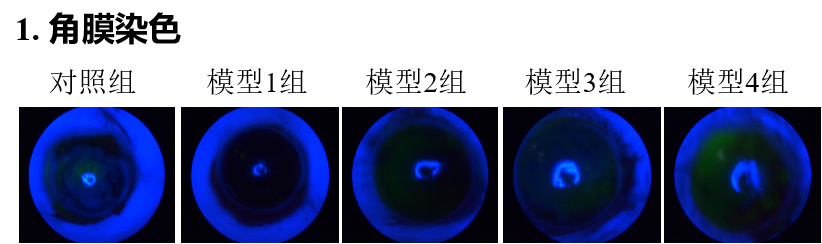
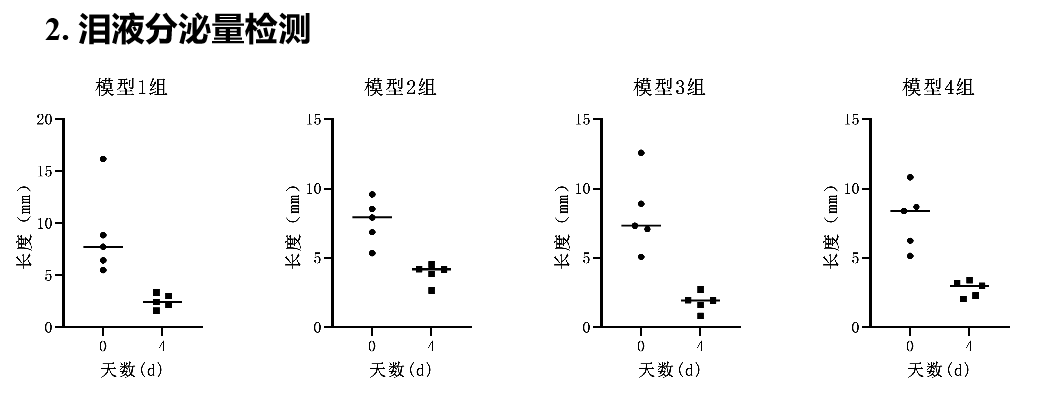
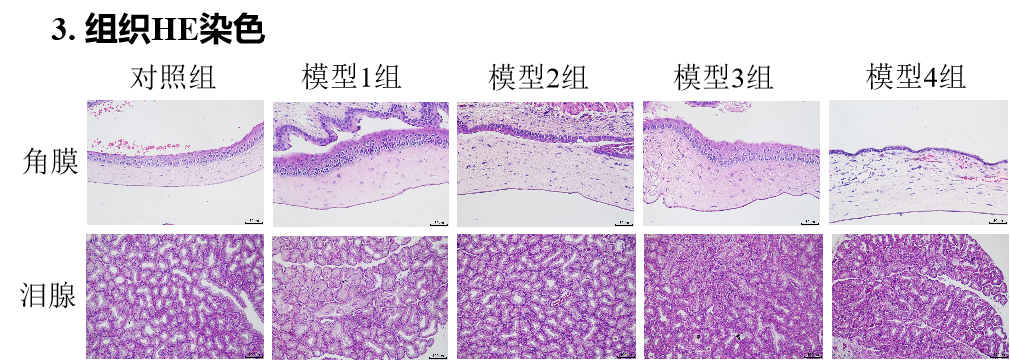
The results showed that the control group had normal structures with no significant pathological changes; in the model groups, abnormal corneal structures were observed, with stromal cell edema and thickening of the stromal layer.
In Model 1, noticeable proliferation of epithelial cells was seen in the corneal tissue;
in Model 2, partial loss of the epithelial structure was observed, with minor hemorrhage in the stromal layer and vascular dilation and congestion in the lacrimal glands;
in Model 3, significant epithelial cell proliferation was noted in the corneal tissue, and the lacrimal gland acini were highly dilated;
in Model 4, there was a reduction in corneal epithelial cells, thinning of the epithelial layer, capillary proliferation and vascular dilation and congestion in the stromal layer, accompanied by inflammatory cell infiltration. In summary, so the model was successful.
Reference:
[1] Consensus of Chinese Experts on Dry Eye: Definition and Classification (2020)[J]. Chinese Journal of Ophthalmology, 2020, 56(06): 418-422.
[2] Fiona Stapleton, Monica et al. TFOS DEWS II Epidemiology Report[J]. The Ocular Surface, 2017.
[3] Zhang Li. Analysis of Clinical Characteristics of 240 Patients with Dry Eye[J]. Chinese Journal of Modern Drug Application, 2019, 13(13): 23-25.
[4] Mu J, Ding X, Song Y, Mi B, Fang X, Chen B, Yao B, Sun X, Yuan X, Guo S, Hua X. ROS-Responsive Microneedle Patches Enable Peri-Lacrimal Gland Therapeutic Administration for Long-Acting Therapy of Sjögren's Syndrome-Related Dry Eye. Adv Sci (Weinh). 2025 Apr;12(16):e2409562. doi: 10.1002/advs.202409562.
[5] Vittitow J, Kissling R, DeCory H, Borchman D. In Vitro Inhibition of Evaporation with Perfluorohexyloctane, an Eye Drop for Dry Eye Disease. Curr Ther Res Clin Exp. 2023 May 12;98:100704. doi: 10.1016/j.curtheres.2023.100704.
[6] Tian L, Gao Z, Zhu L, Shi X, Zhao S, Gu H, Xu G, Wang L, Dai H, Zhang H, Jin X, Ma K, Xu Y, Ma L, Pei C, Ke B, Krösser S, Zhang Y, Jie Y. Perfluorohexyloctane Eye Drops for Dry Eye Disease Associated With Meibomian Gland Dysfunction in Chinese Patients: A Randomized Clinical Trial. JAMA Ophthalmol. 2023 Apr 1;141(4):385-392. doi: 10.1001/jamaophthalmol.