


Breakthroughs in three major mechanisms, multiple new drugs launched! New hope for Parkinson disease treatment
With the intensification of global aging, Parkinson's disease (PD) has become the second most common neurodegenerative disease after Alzheimer's disease. According to the British Medical Journal, it is predicted that by 2050, the number of patients worldwide will reach 25 million, an increase of 112% compared to 2021. The resulting symptoms, such as tremors, bradykinesia, and muscle rigidity, seriously affect patients' quality of life, and there is a long-term lack of curative treatment.

In recent years, top journals such as Science and Nature have continuously published groundbreaking research, achieving comprehensive innovations from pathogenic mechanisms to treatment strategies. Coupled with the intensive advancement of pipelines by global pharmaceutical companies, this has brought new hope for precise treatment of this difficult-to-treat disease.
Breakthrough in Core Mechanisms: From Single Targets to Network Regulation
Somatic Cognitive Network (SCAN) Abnormalities: Core Circuit Mechanisms of PD
No.1
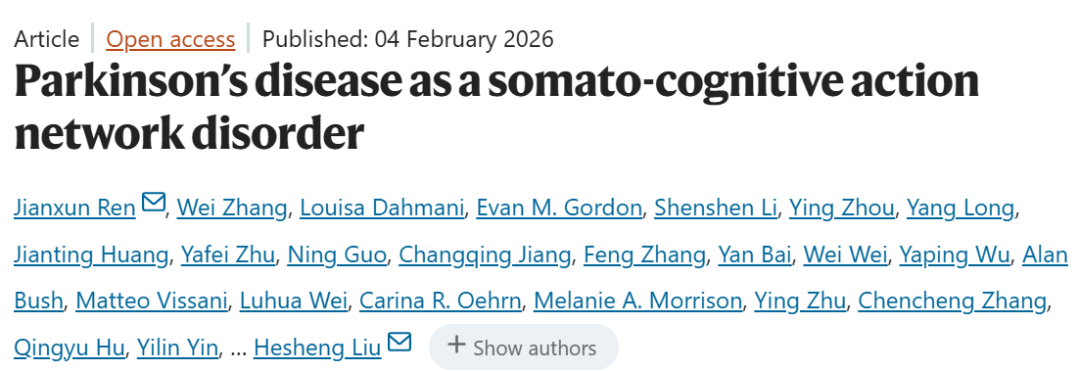
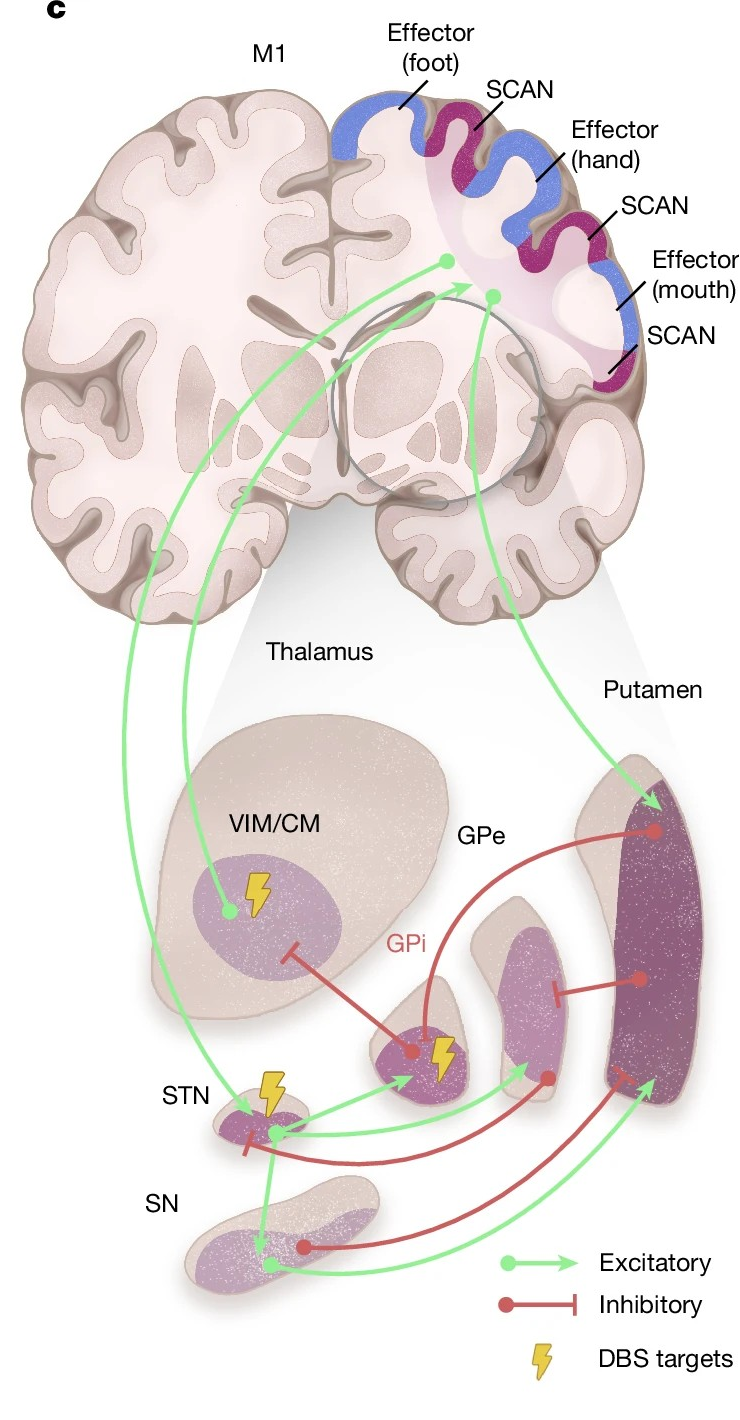
For a long time, Parkinson's disease has been considered a movement disorder caused by the degeneration of dopaminergic neurons, but this could not explain its complex systemic symptoms. A study by Professor Liu Hesheng's team at Changping Laboratory, published in Nature in 2026, for the first time clearly identified that the core pathogenic mechanism of Parkinson's disease is the dysfunction of the somatic cognitive network (SCAN). This network is responsible for action planning, coordination, and regulation of autonomic nervous functions, and in the brains of patients, it forms pathologically enhanced connections with deep brain nuclei such as the substantia nigra and basal ganglia, directly causing typical motor symptoms.
A study integrating 863 human brain imaging data confirmed that all effective treatments (including deep brain stimulation and levodopa) work by downregulating this abnormal connectivity. More importantly, SCAN hyperconnectivity is specific to Parkinson's disease and does not appear in other movement disorders such as idiopathic tremor and amyotrophic lateral sclerosis, which can serve as a disease-specific biomarker.
FAM171A2 Mediates α-Synuclein Uptake: A Key Node in Disease Progression
No.2
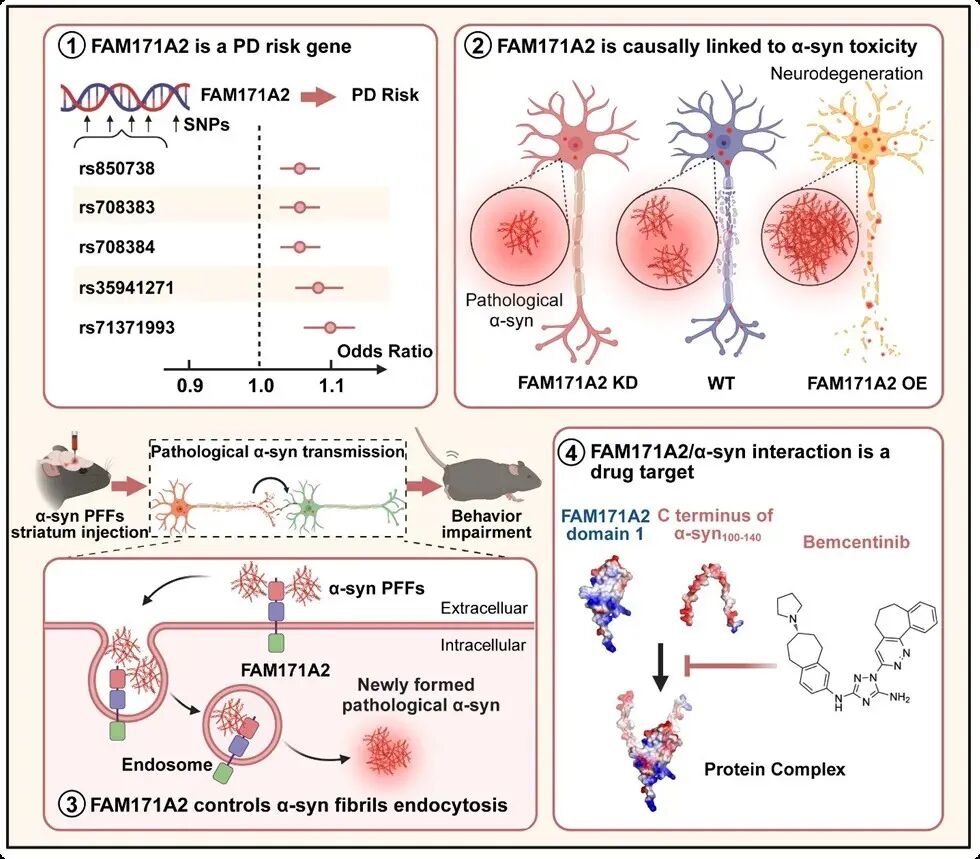
Abnormal aggregation and propagation of α-synuclein (α-syn) are core pathological features of Parkinson's disease, but the mechanism by which neurons take up this protein has remained unclear. A 2025 study published in Science found that the protein encoded by the Parkinson's disease risk gene FAM171A2 acts as a neuronal receptor for α-synuclein fibrils, specifically binding to its C-terminal through electrostatic interactions, mediating endocytosis, and aggravating pathological propagation.

Further studies confirmed that the approved drug bemcentinib can block the binding of the two, effectively inhibiting α-synuclein internalization in both in vitro and in vivo models, providing a novel target for the development of disease-modifying therapies. This discovery reveals the key molecular mechanism of Parkinson's disease pathological progression and fills the research gap in receptor-mediated pathological protein propagation.
Innovation in Treatment Strategies: From Symptomatic Treatment to Precision Intervention
Targeted Drug Pipeline: Multi-Mechanism Exploration for Crossing the Blood-Brain Barrier
No.1 global pharmaceutical company is developing a diversified drug pipeline around core targets for Parkinson's disease, overcoming the bottlenecks of the blood-brain barrier and disease complexity:
· Allosteric small molecules and protein degraders: AbbVie's Tavapadon, as a novel dopamine D1/D5 receptor partial agonist, has submitted a new drug application to the FDA and can improve motor symptoms with once-daily oral administration; Arvinas' PROTAC degrader ARV-102 has been shown in Phase I clinical trials to penetrate the blood-brain barrier, providing the possibility for targeted degradation of abnormal proteins.
Stem Cell Therapy: Rebuilding Dopaminergic Neural Function
No.3 Cell replacement therapy offers a curative possibility for advanced patients:
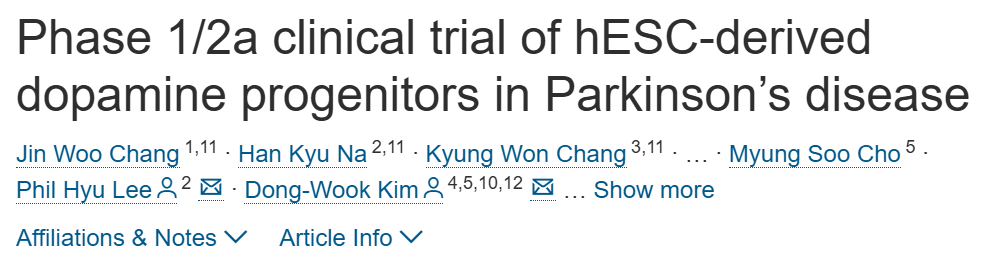
· Human embryonic stem cell-derived therapy: A Phase 1/2a clinical trial published in Cell showed that transplanting directed cultured dopaminergic precursor cells into the putamen region of patients, the high-dose group had a reduction of approximately 3 hours in 'off' time, and the transplanted cells successfully matured into functional neurons and formed synaptic connections.
Allogeneic mesenchymal stem cells: Phase II clinical trial (NCT04995081) by Hope Biosciences in the United States uses intravenous infusion, exerting effects by secreting neurotrophic factors and regulating the immune microenvironment, with good safety, providing a new option for patients who cannot tolerate surgery.

Summary and Outlook
Current Parkinson's disease research has achieved dual breakthroughs from mechanism to treatment. The discovery of SCAN circuit abnormalities and the FAM171A2 target provides a core direction for precise intervention. Targeted drugs, neuromodulation, and stem cell therapy are advancing on multiple fronts, covering different disease stages and subtypes, gradually overcoming the limitations of traditional symptomatic treatment. In the future, with the integration of multi-omics and precision delivery technologies, combined treatment plans will further enhance efficacy, potentially ushering Parkinson's disease treatment into a new era of 'early diagnosis and early treatment, precise modification,' bringing higher-quality treatment options to patients worldwide.