


Psoriasis Treatment Double-Line Victory: Oral Peptide Endorsed by The Lancet, Topical New Drug Reshapes Clinical Standards
Psoriasis Treatment Double-Line Victory: Oral Peptide Endorsed by The Lancet, Topical New Drug Reshapes Clinical Standards
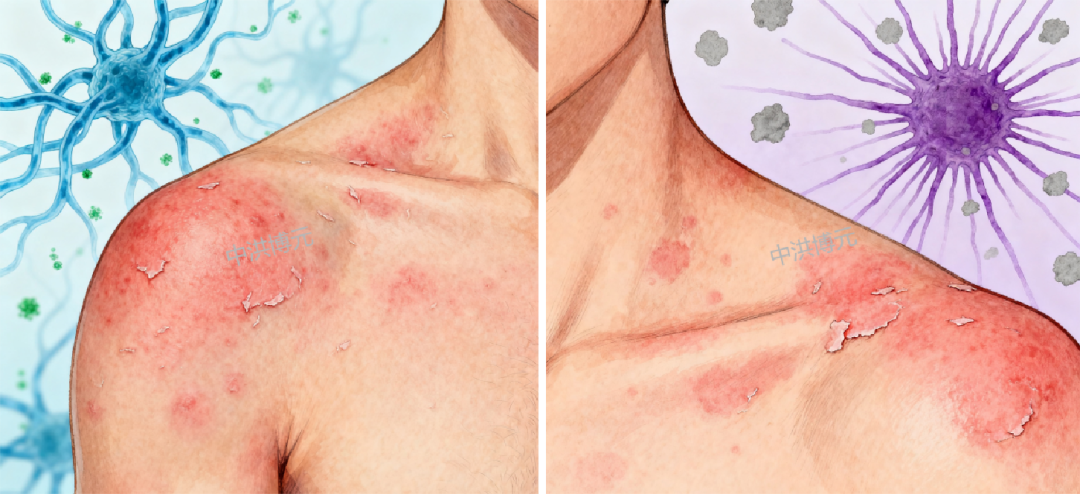
Psoriasis is a globally prevalent chronic immune-mediated inflammatory disease, affecting nearly 125 million people worldwide. This condition, primarily characterized by red, scaly patches on the skin, is often accompanied by comorbidities such as psoriatic arthritis and cardiovascular diseases, severely impacting patients' quality of life.For a long time, the clinical treatment of psoriasis has faced the core dilemma of 'difficulty in balancing high efficacy with convenient administration, and the inability to simultaneously ensure safety and lasting efficacy.' However, starting from 2025, the breakthrough research results of the innovative oral peptide formulation icotrokinra and tapinarof cream are reshaping the clinical treatment of psoriasis from both systemic and local treatment dimensions.
Oral breakthrough: icotrokinra reaches the top of The Lancet with its head-to-head advantage
On September 18, 2025, The Lancet published the results of the Phase III clinical trials (ICONIC-ADVANCE 1 & 2), making the innovative oral peptide icotrokinra a global focus.This drug, rated as one of the Top Ten Star Molecules of 2024 by 'Drug Hunter', breaks through the current bottlenecks of systemic therapy with its threefold advantages of 'precise targeting, convenient oral administration, and outstanding efficacy'.
The therapeutic advantage of Icotrokinra becomes apparent early in the treatment, showing a significant difference from the placebo group by the 8th week.By week 16, in the two studies, the proportion of patients in the icrotakinra group achieving IGA 0/1 (clear or almost clear skin) with an improvement of ≥2 points from baseline reached 68% and 70%, respectively, whereas the placebo group only reached 11% and 9%;What is even more noteworthy is that 55%–57% of patients achieved PASI 90 (at least 90% improvement in condition), and 31%–32% of patients reached PASI 100 (complete clearance of lesions), which are more than 13 times and over 30 times higher than the placebo group, respectively.
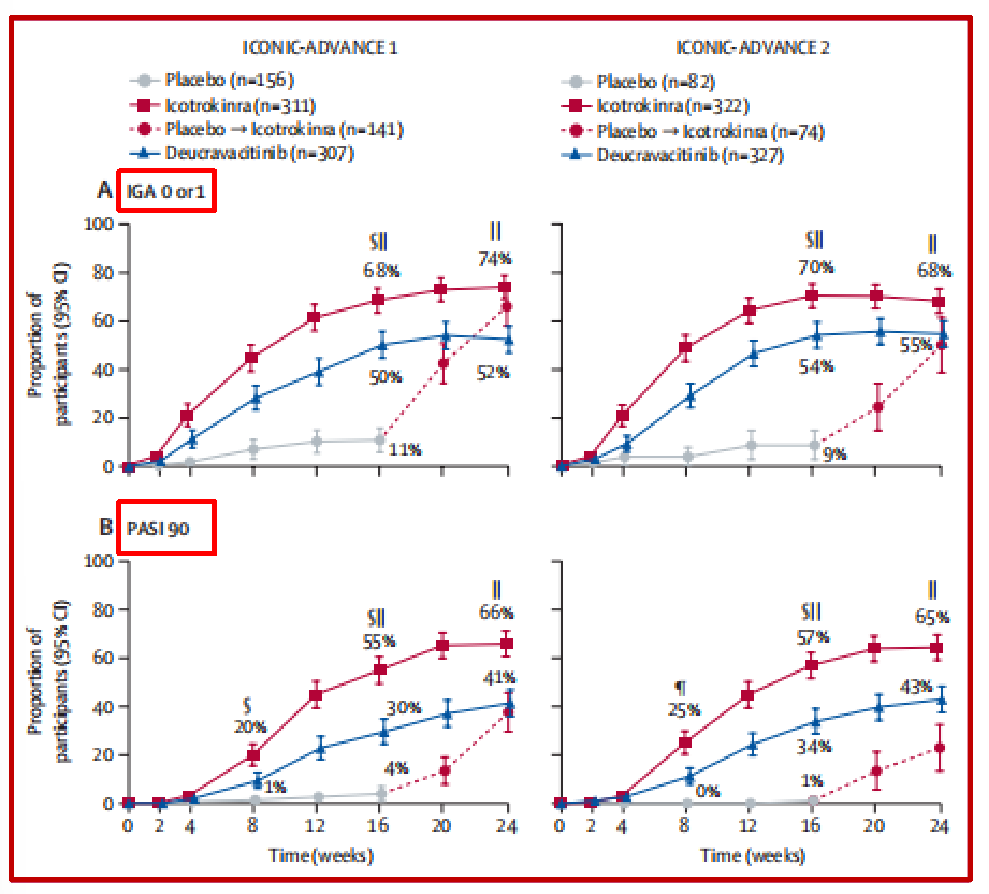
Proportion of subjects achieving the common primary endpoints of IGA 0 or 1* and PASI 90 at different time points by treatment group (Image source: The Lancet)
Note: IGA refers to the Investigator's Global Assessment, and PASI refers to the Psoriasis Area and Severity Index. 'IGA 0 or 1' indicates the skin is completely or almost clear, while 'PASI 90' indicates at least a 90% improvement from baseline.
In head-to-head comparisons with the approved oral drug deucravacitinib, icotrokinra also shows a notable advantage: at week 16, its PASI 90 response rate is nearly double that of the control group (55%/57% vs 30%/34%), and the rate of complete skin clearance reaches about three times that of the control group (31%/32% vs 11%/14%), with this advantage persisting through week 24.
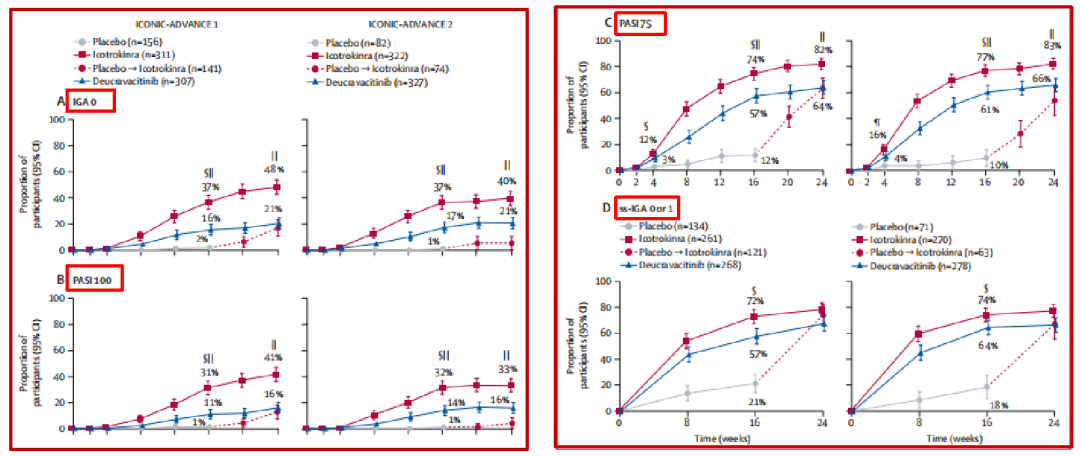
Proportion of subjects achieving IGA 0, PASI 100, PASI 75, and ss-IGA 0 or 1* at different time points by treatment group (Image source: The Lancet)
Note: 'IGA 0' refers to complete clearance of the skin, 'PASI 100' refers to complete improvement of psoriasis compared to baseline (100% improvement), 'PASI 75' refers to at least 75% improvement of psoriasis compared to baseline, 'ss-IGA' is the scalp-specific investigator global assessment, and 'ss-IGA 0 or 1' refers to complete or nearly complete clearance of scalp lesions.
Topical Innovation: Tapinarof breaks the 25-year stalemate of no new molecular entities
While breakthroughs have been achieved in oral therapy, the field of topical treatment has also reached a milestone. Dermavant Sciences' 1% tapinarof cream (marketed in the U.S. as Vtama, known in China as benvitimod) is the first new topical molecular entity approved in the U.S. in 25 years, and with its characteristics of 'suitable for all populations, no usage restrictions, and non-steroidal safety,' it has rewritten the clinical rules for topical treatment.
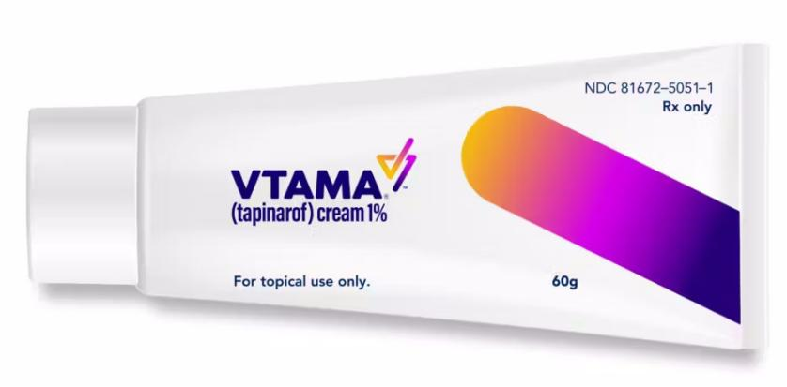
Image source: Oriental Medicine Network
This natural compound, derived from the metabolites of soil nematode symbiotic bacteria, is a 'first-in-class' aryl hydrocarbon receptor (AhR) modulator. Its mechanism of action differs from conventional topical drugs: it inhibits IL-17-mediated inflammatory responses by modulating AhR function — a pathway that is a 'star target' in psoriasis treatment, and many major biologic drugs are designed to target it.Thanks to its small molecule structure of 254 Da, tapinarof has excellent skin permeability, providing a physical basis for its topical efficacy.

Molecular structure formula of Tapinarof
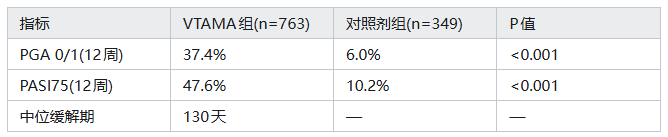
The approval of tapinarof is based on the positive results of two pivotal Phase III clinical trials (PSOARING 1/2):Among the patients receiving treatment, 36% to 40% achieved clearance or near-clearance of skin symptoms, compared to only 6% in the control group (p<0.0001).Long-term data further demonstrate its unique advantages: the efficacy remains stable throughout the 52-week treatment period, with no therapy failure observed, and patients who achieve complete clearance can maintain the effect for an average of 4 months after discontinuing the drug.In the patient satisfaction survey, 81.7% of respondents believed it was superior to the topical therapies(JAMA Dermatol, 2023)they had previously used.。
Research Support and Clinical Prospects: From Model Construction to Therapy Advancement
Breakthroughs in innovative therapies rely on the support of basic research. Establishing a stable mouse model of psoriasis can accelerate the translation of new drugs from the laboratory to clinical practice.From a clinical application perspective, the complementarity of icotrokinra and tapinarof provides a 'comprehensive solution' for the treatment of psoriasis:From a clinical application perspective, the complementarity of icotrokinra and tapinarof provides a 'comprehensive solution' for the treatment of psoriasis: patients with moderate to severe conditions can achieve efficient lesion clearance through oral icotrokinra, while patients with mild to moderate conditions or those in the maintenance treatment phase can use topical tapinarof. Both therapies do not require injections, have good safety profiles, and are expected to significantly improve long-term treatment adherence.With the continued advancement of the ICONIC series research and the expansion of tapinarof indications, psoriasis treatment is shifting from 'symptom control' to 'sustained remission.' For hundreds of millions of patients worldwide, these innovative therapies not only mean improvement in skin symptoms but also hold the potential to reduce the risk of complications and reshape quality of life. As Dermavant CEO Todd Zavodnick stated, patient-centered innovation is driving psoriasis treatment into a new era of 'efficiency, safety, and convenience.'
Introduction to Zvast Biotechnology Psoriasis Model — Imiquimod Cream-Induced Mouse Psoriasis Model
Imiquimod (IMQ) is an imidazoquinoline amine immunomodulator (TLR7/8 agonist) that can induce psoriasis-like changes in the dorsal skin of Balb/c mice, C57 mice, and others. Its mechanism of action mainly depends on the IL-23/IL-17 axis, which is very similar to the pathogenesis of human psoriasis. It is currently the most widely used acute mouse model of psoriasis-like skin inflammation.
Healthy male Balb/c mice were selected, and after completing standardized adaptive feeding, a skin exposure model was established through professional handling. The experiment adopted a scientific approach of 'preventive intervention with simultaneous treatment': first, three days of preventive care were provided, followed by seven days of continuous treatment during model construction, with the corresponding interventions applied daily in a standardized manner.In the experiment, Benvimod cream was selected as the positive control drug, and the standard administration method of applying it topically twice daily was used.
The model construction success rate reached 100%, with no mouse deaths throughout the process.
模型构建
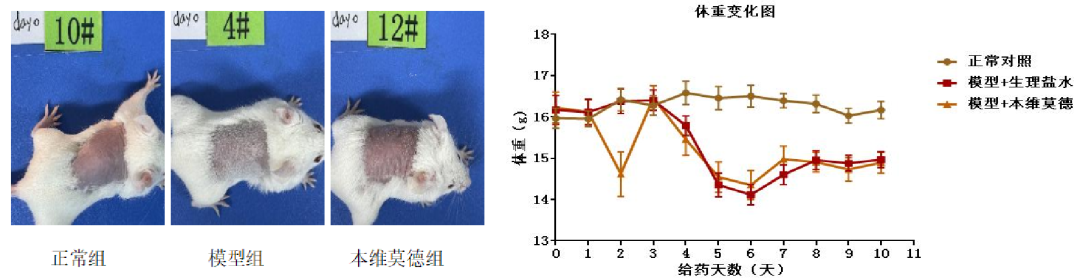
Weight monitoring showed that at the end of the experiment, the body weight of mice in the IMQ + normal saline (NS) group was significantly lower than that of the blank control group (P<0.01), whereas there was no significant difference between the IMQ + Benvimid (BWMD) group and the IMQ + NS group, suggesting that the modeling affected the mice's body weight, but the drug did not have this effect.
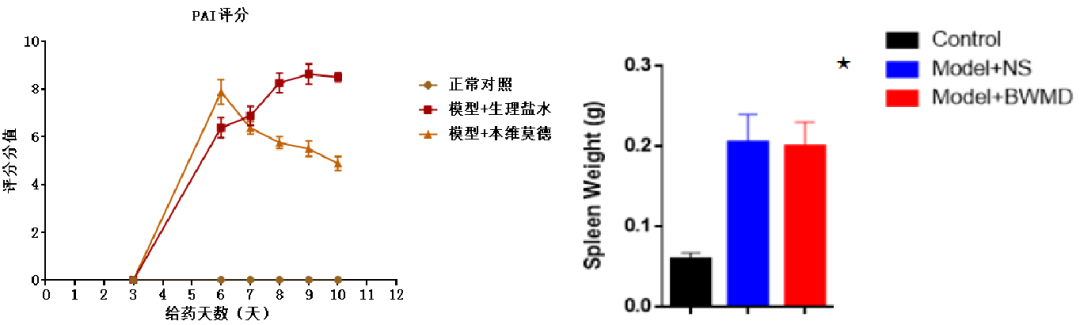
The PASI scoring results indicated that from days 7 to 11 of administration, the IMQ NS group was significantly higher than the blank control group (P<0.01); from days 9 to 11 of administration, the IMQ BWMD group was significantly lower than the IMQ NS group (P<0.01). On the day of sample collection, mouse spleens were harvested. The spleen weight of the IMQ NS group was significantly increased compared to the blank control group, with no significant differences observed between the model group and the positive drug group.
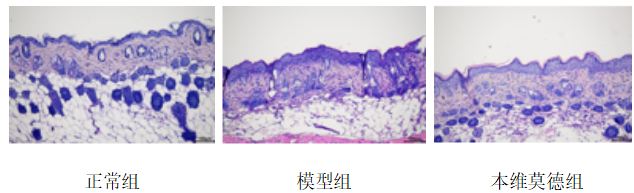
HE staining showed that the skin structure of the blank control group was normal, while the IMQ NS group exhibited significant dyskeratosis, hyperkeratosis, thickening of the spinous layer, inflammatory cell infiltration in the dermis, and capillary dilation. These pathological changes were significantly alleviated in the IMQ BWMD group.
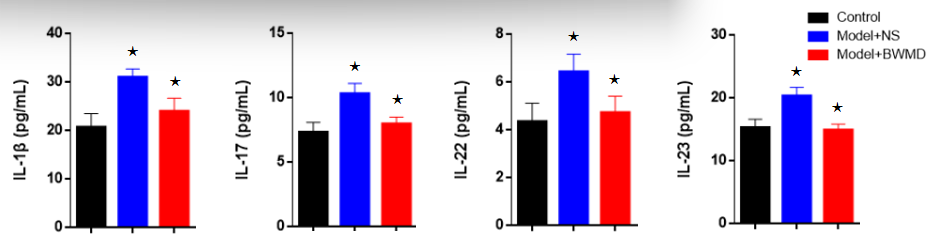
ELISA test results showed that the levels of IL-1β, IL-17, IL-23, and IL-22 in the serum of mice in the IMQ NS group were significantly higher than those in the blank control group (P<0.01), while the levels in the IMQ BWMD group were significantly lower than those in the IMQ NS group (P<0.01).
In summary, this model can effectively simulate the pathological features of psoriasis and the associated cytokine changes, validating the establishment of the model.
References
【1】Gold, Linda Stein et al. “Once-daily oral icotrokinra versus placebo and once-daily oral deucravacitinib in participants with moderate-to-severe plaque psoriasis (ICONIC-ADVANCE 1 & 2): two phase 3, randomised, placebo-controlled and active-comparator-controlled trials.” Lancet (London, England) vol. 406,10510 (2025): 1363-1374. doi:10.1016/S0140-6736(25)01576-4.
【2】Bagel, Jerry et al. “Tapinarof cream 1% once daily for the treatment of plaque psoriasis: Patient-reported outcomes from the PSOARING 3 trial.” Journal of the American Academy of Dermatology vol. 89,5 (2023): 936-944. doi:10.1016/j.jaad.2023.04.061
【3】Yingying D,Shiyu Z,Qiong W et al.A new method for establishing a psoriasis mouse model[J].Chinese Journal of Dermatology and Venereology,2016,30(11),1127-1131.