Treatment for Chronic Heart Failure, Salubris JK07 May Break the Deadlock!
Treatment for Chronic Heart Failure, Salubris JK07 May Break the Deadlock!
Heart failure (HF) is a condition characterized by structural and/or functional abnormalities of the heart that impair ventricular contraction and/or relaxation. Its primary manifestations include dyspnea, fatigue, and fluid retention.
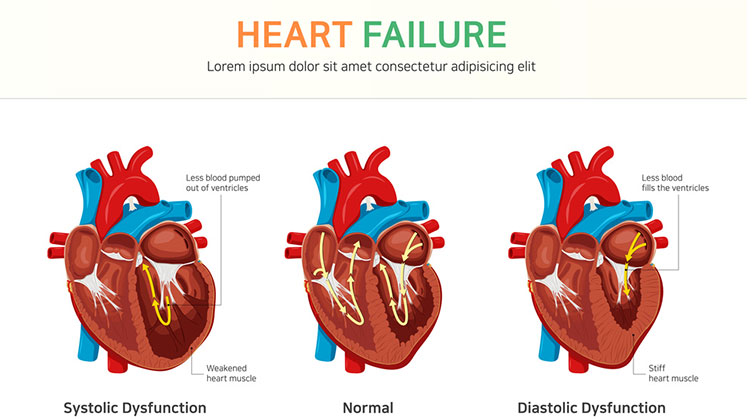
Chronic heart failure (CHF) refers to a persistent state of heart failure that may be stable, worsening, or decompensated. With an aging population and rising incidence of metabolic diseases such as obesity and diabetes, the global number of heart failure patients continues to grow, exceeding 64 million.
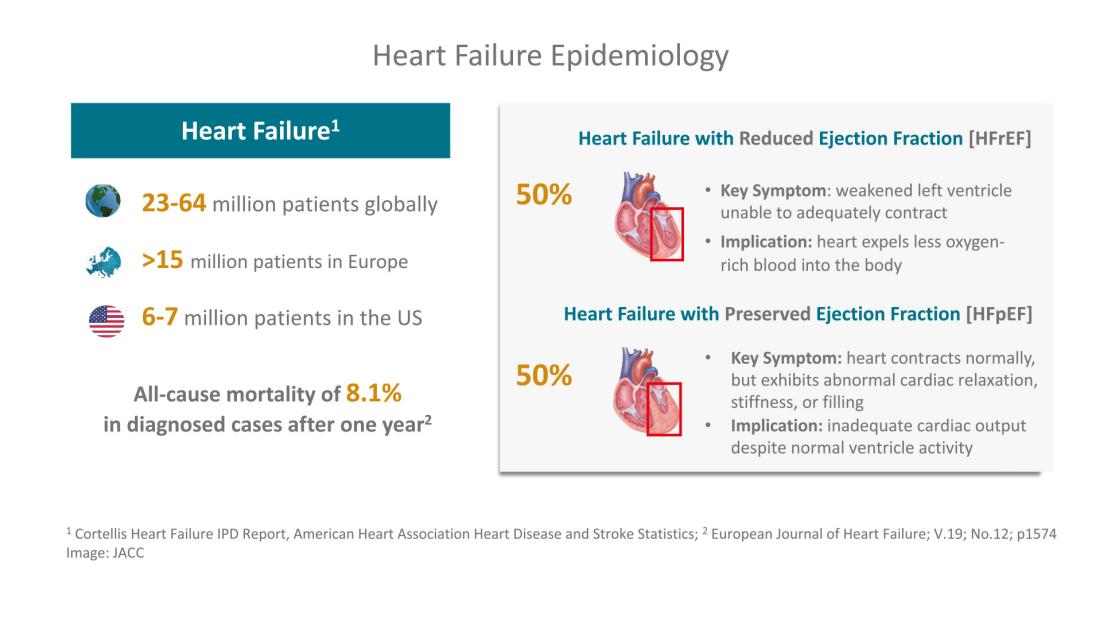
Heart failure (HF) comprises two primary forms: one is heart failure with reduced ejection fraction (HFrEF), where the heart muscle cannot contract properly to pump sufficient oxygen-rich blood to the rest of the body. The other is heart failure with preserved ejection fraction (HFpEF), where the left ventricle contracts normally (thus maintaining a normal ejection fraction), but impaired diastolic function prevents the heart from effectively filling with blood, resulting in reduced blood output.
On September 23, Salubris Pharmaceutical held an investor open day, announcing a series of innovative achievements and pipeline progress. Among them, a drug designated as JK07 for treating chronic heart failure caused a sensation, driving the company's market value to surpass 70 billion yuan for the first time.
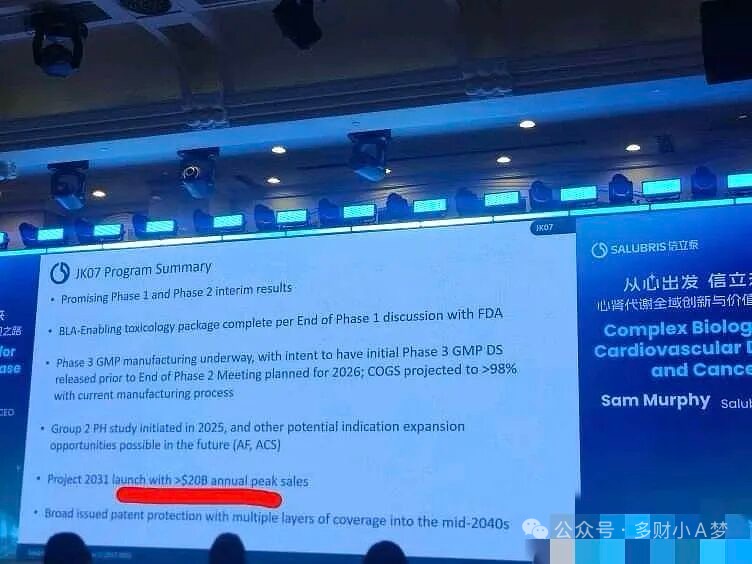
JK07 is an innovative drug developed independently by Salubris Biotherapeutics (SalubrisBio), a U.S.-based subsidiary of Salubris . Currently undergoing Phase II clinical trials with promising mid-stage results, it is projected to achieve peak sales exceeding $20 billion.
JK07, fully known as Recombinant Human Neuromodulin 1 (NRG-1)-Anti-HER3 Antibody Fusion Protein Injection, is a globally patented NRG-1 fusion antibody drug. It represents the first antibody fusion protein and selective ErbB4 agonist to enter clinical development in the field of heart failure. Its proposed indications include HFrEF and HFpEF.
NRG-1 primarily exerts its therapeutic effects by binding to the ErbB3 or ErbB4 receptors on cardiomyocytes. Based on this mechanism, the potential first-in-class drug Nuqade (recombinant human N-receptor growth factor, rh-NRG-1) is currently in Phase III clinical trials.
However, due to its small molecular weight (44kD), NRG-1 exhibits a very short half-life (10 minutes after intravenous injection and only 1.5 hours after subcutaneous injection), necessitating higher doses that increase toxicity risks. Furthermore, the ErbB (also known as HER) family is closely associated with cancer, and NRG-1 binding to the HER3 receptor may elevate carcinogenic risks.
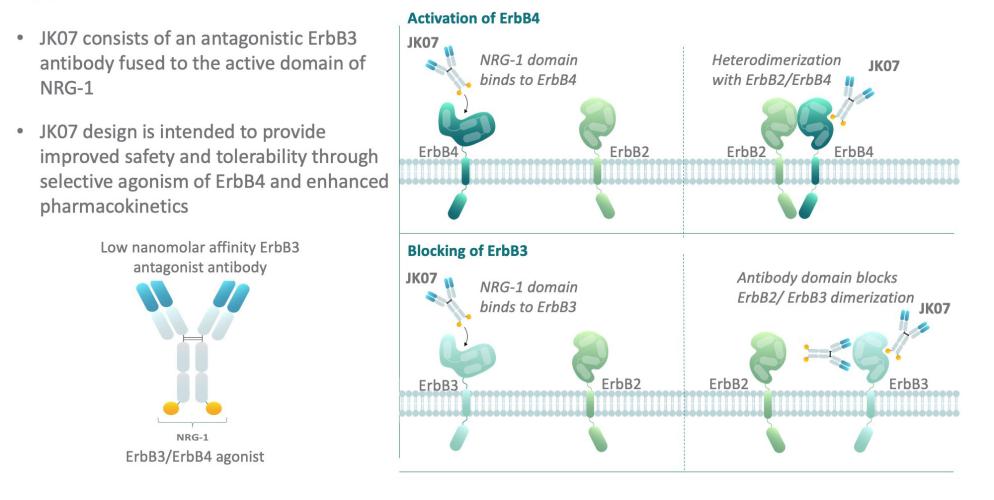
图片来源:SalubrisBio官网
The design and fundamental principle of JK07—a selective ErbB4 agonist—addresses two existing limitations of NRG-1. By conjugating NRG-1 with a HER3 monoclonal antibody, its molecular weight is significantly increased, resulting in a half-life of 25 days for JK07. On the other hand, the HER3 antibody portion of JK07 binds to the HER3 receptor, thereby blocking the NRG-1 portion from binding to the HER3 receptor. This selectively activates HER4 while simultaneously inhibiting HER3 receptor function, reducing carcinogenic risks and significantly enhancing both drugability and safety.
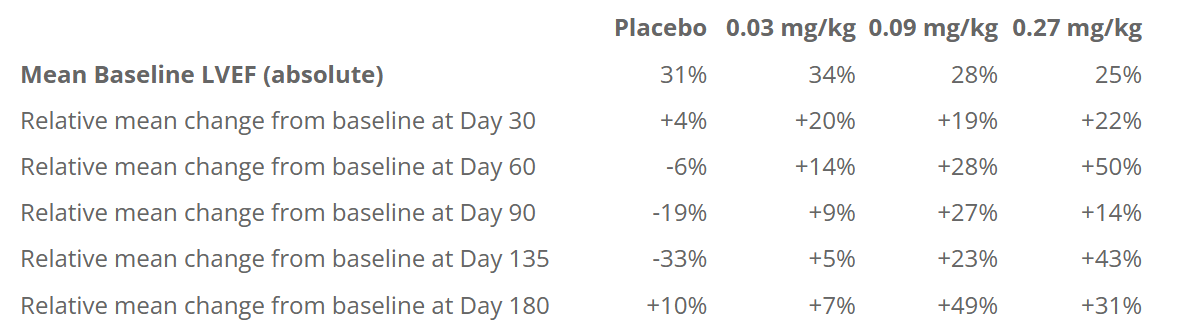
In terms of efficacy, Salubris Biotherapeutics (SalubrisBio) presented positive six-month data from its JK07 Phase 1b clinical trial at a late-breaking session of the 2023 American Heart Failure Association Annual Meeting.
In this study, 14 patients were randomly assigned to an active treatment group and a placebo group in a 3:1 ratio (11 patients receiving JK07: 3 patients receiving placebo). The first two groups each had 5 patients (receiving 0.03 mg/kg and 0.09 mg/kg, respectively). and the third group comprised 4 patients (0.27 mg/kg). A single intravenous dose was administered, and changes in the key indicator of cardiac pumping capacity—“left ventricular ejection fraction (LVEF)”—relative to baseline values were assessed.
Results showed an average improvement of 31% in ejection fraction (EF) at medium-to-high dose levels. The full study findings demonstrated that JK07 was well tolerated with no dose-limiting toxicities observed. At the 0.27 mg/kg dose, LVEF showed an average change of 50% from baseline after 60 days of administration!
JK07 is currently undergoing a Phase II MRCT (multicenter, randomized, controlled trial) clinical study (RENEU-HF) in patients with HFrEF and HFpEF. Enrollment of HFrEF patients has been fully completed, with primary endpoint data readout anticipated in the first half of 2026. Enrollment of HFpEF patients is progressing smoothly, with overall advancement meeting expectations.
Currently, Novartis' Entresto (code name LCZ696) reigns as the global blockbuster drug for heart failure treatment, with annual sales nearing $8 billion. This underscores the immense market potential in heart failure therapy. As a drug with a novel mechanism of action, JK07 has demonstrated promising early data.Salubris' projection of a $20 billion peak sales figure for JK07 may not be entirely unrealistic.
More importantly, like Hengrui and Huadong Medicine, Salubris has carved out a viable path toward innovation-driven transformation. JK07 also epitomizes China's push from generic drugs to first-in-class innovations in pharmaceutical development.
Introduction to the Zvast Biotechnology Chronic Heart Failure Model
I.Chronic Heart Failure Model in Mice Induced by Transverse Aortic Constriction (TAC)
Model creation method: After anesthetizing C57BL/6J mice, make a transverse incision below the upper edge of the sternum and ligate the aortic arch using sutures. Model validation is performed after 8 weeks.
Model validation: A left ventricular short-axis fractional shortening (FS) value below 25% indicates a significant reduction in left ventricular contractility.
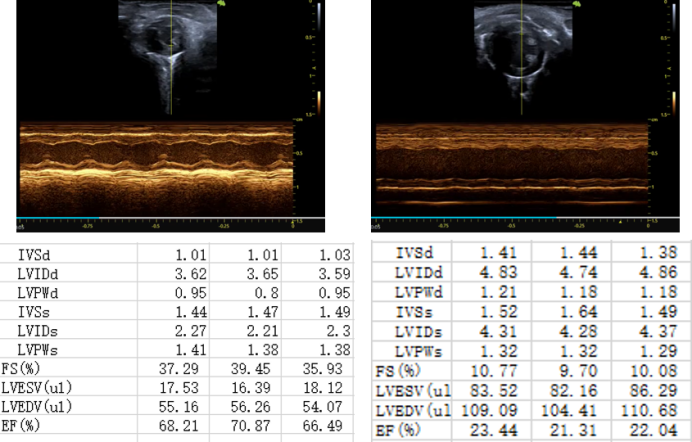
Note: A left ventricular ejection fraction (EF) value below 50% indicates heart failure. Values between 40% and 50% represent mild heart failure, while 30% to 40% indicate moderate heart failure. Values below 30% are classified as severe heart failure.
II. Chronic Heart Failure Model in Rats (Doxorubicin Method)
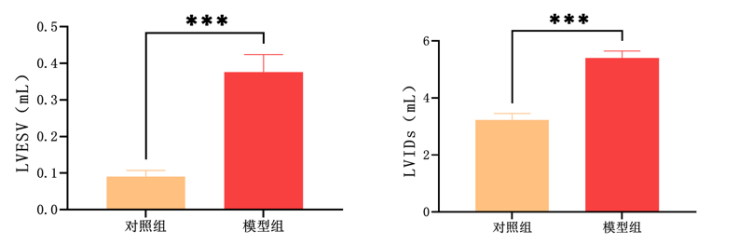
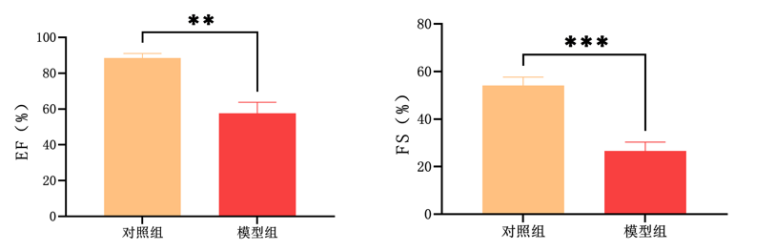
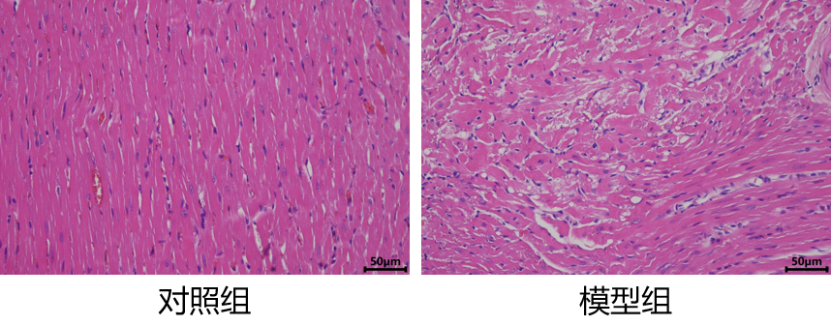
Model Development Method: Male Wistar rats (approximately 300 g) received weekly intraperitoneal injections of doxorubicin hydrochloride solution for 8 weeks, totaling 8 injections.
Model Validation:
1. Echocardiogram
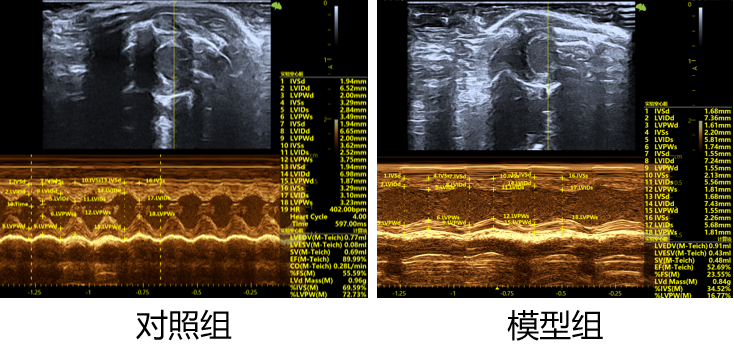
2. HE-stained myocardial tissue
III. Rat Myocardial Infarction Model of Heart Failure
Model creation: Induce myocardial infarction in rats by ligating the left descending coronary artery, followed by model validation after 3 weeks.
Model Validation:
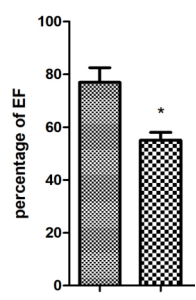
1. Echocardiographic analysis revealed that heart failure significantly impaired cardiac function in rats compared with the control group. In the model group, the percentage of ejection fraction (EF) decreased, showing a significant difference (P < 0.05).
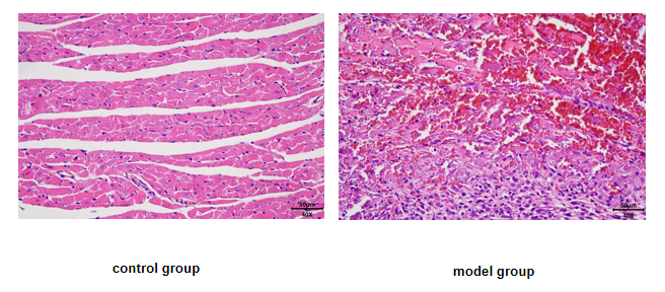
2. Histopathological examination of myocardial tissue using HE staining revealed neatly arranged myocardial cells in the normal group. In contrast, the model group exhibited extensive diffuse hemorrhage within myocardial tissue, with altered nuclear morphology of myocardial cells surrounding hemorrhagic foci and significant inflammatory cell infiltration.
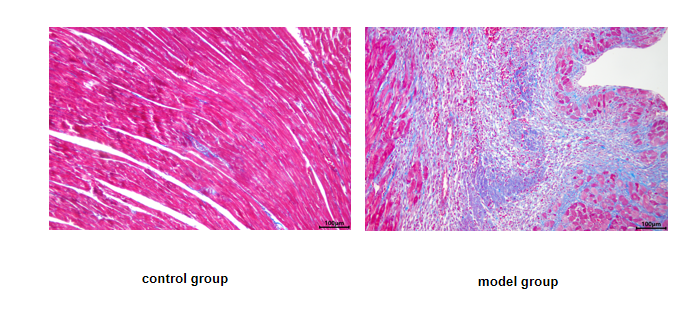
3. Masson staining was used for myocardial tissue pathological observation. The normal group exhibited low myocardial fibrosis, while the model group showed increased myocardial fibrosis.