


New Gout Drug! Advancing Global Phase 3 Clinical Trials to Fill Treatment Gap
New Gout Drug! Advancing Global Phase 3 Clinical Trials to Fill Treatment Gap
Gout is an arthropathy caused by persistent hyperuricemia (serum uric acid levels > 7 mg/dL) resulting from purine metabolism disorders and/or reduced uric acid excretion, leading to the formation and deposition of urate crystals. It manifests as red, swollen joints accompanied by severe pain. Globally, gout affects up to 55.8 million people.
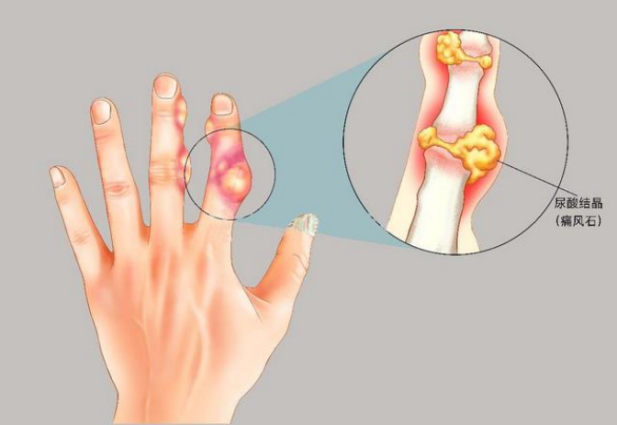
Currently, gout remains incurable. Lowering serum uric acid levels below target values is key to treatment. Primary medications include: (1) Xanthine oxidase inhibitors that suppress uric acid production, such as allopurinol and febuxostat; (2) Urate excretion enhancers that inhibit urate transporter 1, such as benzbromarone, rasebodamide, and probenecid; (3) Urate oxidase analogues that break down uric acid, such as alopurinol.
Although existing therapies aim to lower uric acid levels below the target of 6 mg/dL, a significant treatment gap persists between first-line xanthine oxidase inhibitors and last-line uricase therapy. Currently, there are no suitable second-line options available in the United States or the European Union, creating a substantial unmet need for patients who are unresponsive to first-line treatments or experience significant side effects.
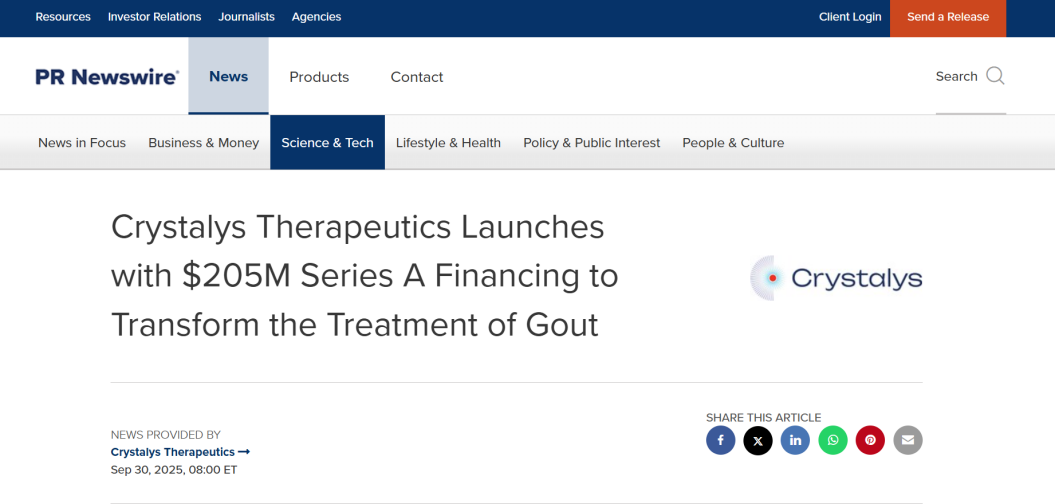
On September 30, 2025, biopharmaceutical company Crystalys Therapeutics announced the official launch and completion of its $205 million Series A financing round to support the advancement of the global Phase 3 clinical trial for dotinurad.
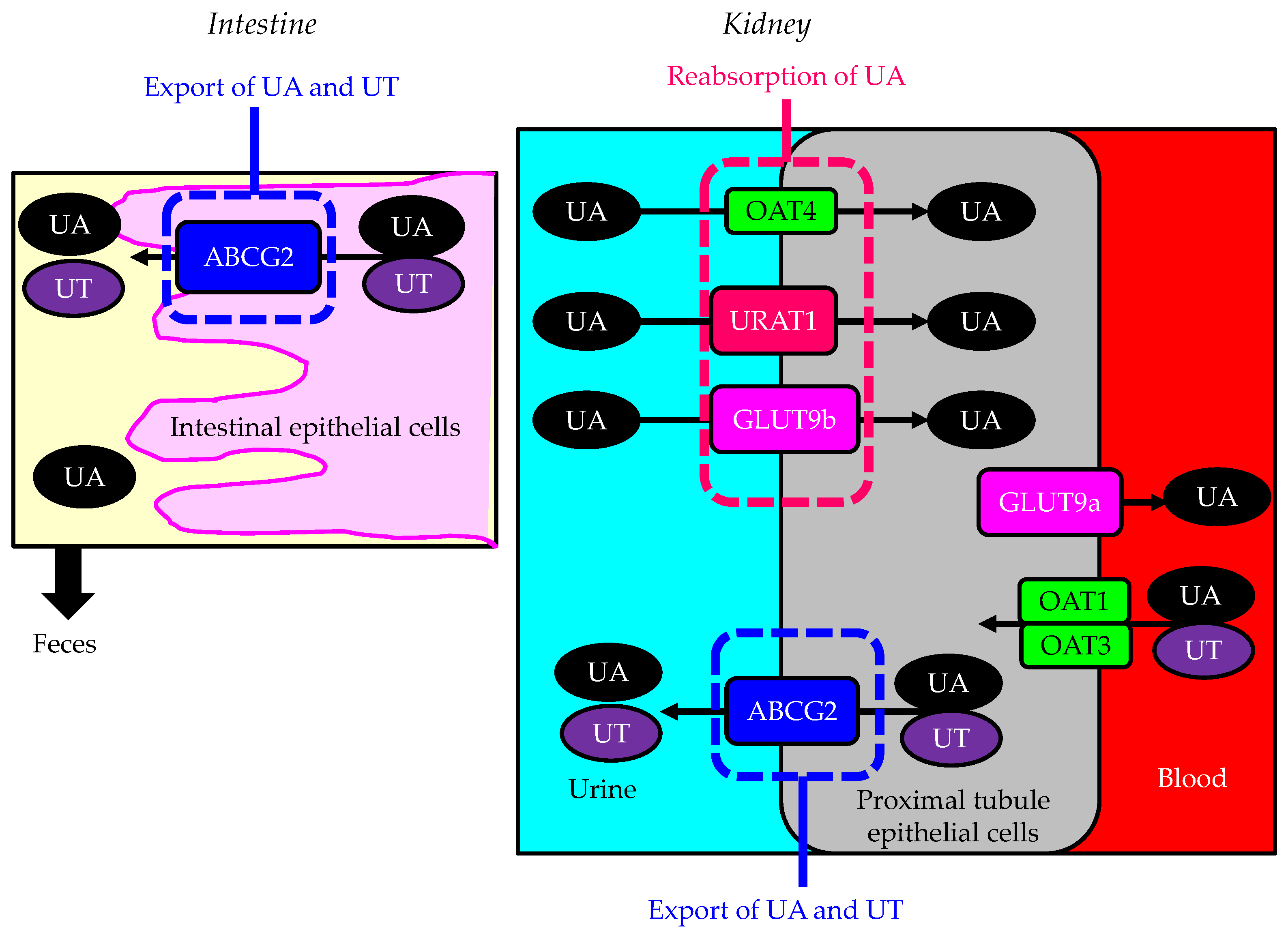
Dotinurad is a highly selective URAT1 inhibitor that selectively inhibits the renal proximal tubular uric acid transporter URAT1, thereby blocking uric acid (UA) reabsorption and promoting uric acid excretion.
Compared to phenylbromomalonate, which also promotes uric acid excretion, dotinurad does not affect the function of uric acid excretion factors ABCG2 and OAT1/3. It demonstrates higher efficacy in lowering serum uric acid levels, and its metabolites do not contain harmful intermediates such as “p-benzoquinone,” thereby avoiding the hepatotoxicity associated with drugs like phenylbromomalonate. Furthermore, Dotinurad does not inhibit intestinal ABCG2, thus preserving intestinal uric acid excretion and reducing renal burden. It does not increase accumulation of uremic toxins (UT), thereby helping to lower risks of chronic kidney disease (CKD) and cardiovascular events (CVD), enhancing the drug's safety and tolerability.
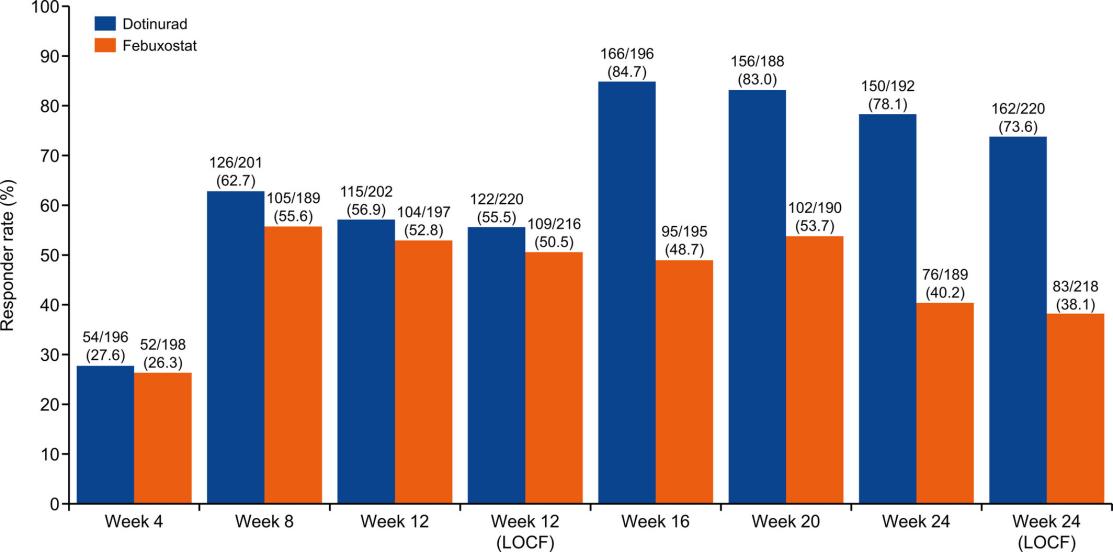
A Phase III clinical study published in Arthritis Rheumatology by a team from Peking University First Hospital compared the efficacy and safety of dotinorel versus febuxostat in Chinese gout patients. Results showed that 73.6% of patients treated with 4mg dotinorel for 24 weeks achieved serum uric acid levels ≤6 mg/dL, significantly higher than the 38.1% rate in the 40mg febuxostat group, with good tolerability.
As a second-line therapy aimed at reducing uric acid levels, gout attacks, and tophi formation. Dotinurad, developed by Fuji Yakuhin Co., Ltd., demonstrates potential best-in-class safety and efficacy in treating gout. Eisai China Inc. is responsible for its exclusive development, sales, and marketing in China.
On December 6, 2024, Eisai China Pharmaceuticals Co., Ltd.'s dotinurad tablets (brand name: Ulesa®) received marketing approval from the National Medical Products Administration (NMPA) for the indication of gout with hyperuricemia. Dotinurad has also been approved for marketing by regulatory authorities in Japan, the Philippines, and Thailand.
Additionally, a highly selective URAT1 inhibitor is currently undergoing global Phase III clinical trials. Poinsettia Pharmaceuticals' Class 1 gout innovation drug, deboritinoxil (AR882), promotes uric acid excretion by inhibiting URAT1, achieving round-the-clock blockade of uric acid reabsorption while avoiding nephrotoxicity. A single daily dose maintains healthy serum uric acid (sUA) levels. Both pivotal global Phase III trials have completed full enrollment. Phase III REDUCE 2 trial data is expected to be disclosed in the second quarter of 2026, with Phase III REDUCE 1 trial data anticipated in the fourth quarter of 2026.
Doteno-re achieves potent and safe uric acid-lowering effects through its unique mechanism of action. With the advancement of its global Phase 3 clinical trials and the submission of generic drug applications for market approval in China, it will provide expanded treatment options for a broad range of gout patients, including those with special populations such as impaired hepatic or renal function.
Zvast Biotechnology Acute Gouty Arthritis Rat Model
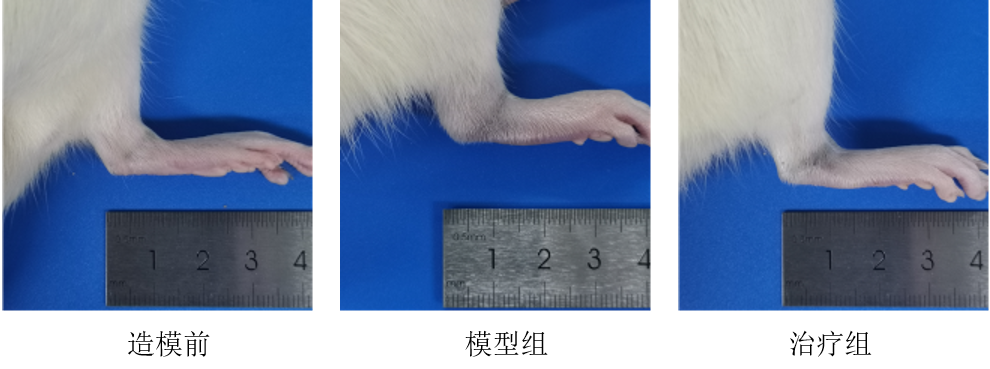
Model creation: Inject a sodium urate suspension into the ankle joint cavity of the right hind limb of rats.
Positive drugs: Allopurinol, Phenylbutazone.
Model Validation:
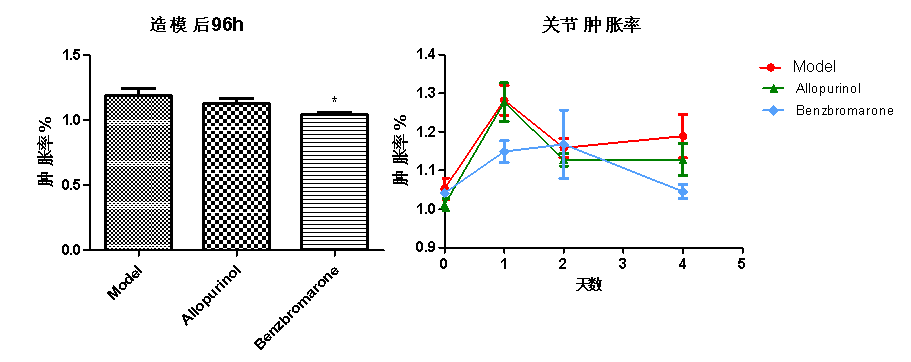
Twenty-four hours after modeling, significant swelling was observed in the rat's modeled ankle joint. The average swelling rate in the model group reached 128.18%, while the average swelling rates in the allopurinol-treated group and the phenylbromomalonate-treated group were 127.67% and 114.88%, respectively, confirming successful modeling.
At 96 hours post-modeling, a significant difference was observed between the model group and the phenylbromomalonate-treated group (*P<0.05), while no statistically significant difference was found between the model group and the febuxostat-treated group.
References: