


Redefining the Highest Standards, this Domestically Developed Innovative Drug Comes Highly Recommended.
Redefining the Highest Standards, this Domestically Developed Innovative Drug Comes Highly Recommended.
Atopic dermatitis (AD), commonly known as “eczema,” is the most prevalent dermatological condition. Its clinical manifestations primarily include dry skin, eczematous rashes, intense itching, redness, swelling, and scaling. Approximately 70 to 80 million people in China suffer from AD.
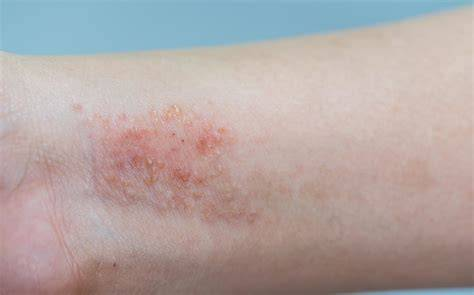
In June 2025, the American Academy of Dermatology (AAD) released its latest revision to the atopic dermatitis treatment guidelines. This update, completed in a record-breaking 23-month cycle—the shortest in history (the previous revision took nine years)—caused a sensation. The revision elevated the use of benemod cream for treating atopic dermatitis to the highest level of “strong recommendation.” This signifies that the global gold standard for dermatological treatment has been rewritten by an innovative Chinese pharmaceutical product.
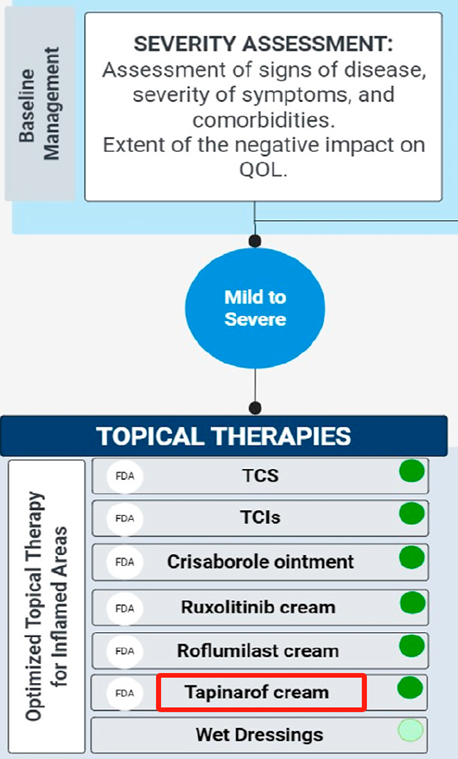
The Development Journey of Benimode
In the 1990s, Chen Genghui and his team isolated tapinarof—a small-molecule compound with potent activity against superbugs—from the metabolic products of symbiotic bacteria associated with a soil nematode.
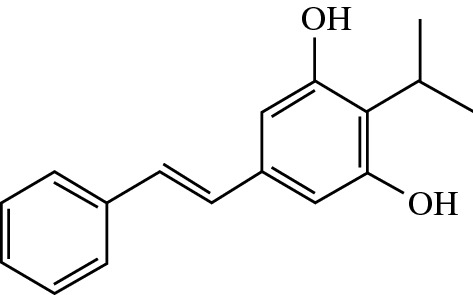
The chemical structure of tapinarof (molecular weight 254 g/mol)
In 2019, Venetoclax Cream (brand name: Ximic) was approved for marketing in China for the topical treatment of mild to moderate stable plaque psoriasis in adults. It was first included in the National Medical Insurance Reimbursement List in 2020.
In 2021, Chen Genghui founded Shanghai Zedeman Pharmaceutical Technology Co., Ltd. to further develop TAP-1503, an improved formulation of benvimod, for the treatment of atopic dermatitis. Clinical trials were conducted simultaneously in both adult and pediatric populations.
In November 2024, Benvimod Cream (brand name: ZeliMei®) received NMPA approval for market launch, becoming the world's first AhR modulator approved for treating atopic dermatitis in children aged 2 years and older and adults. It received FDA approval for market launch 20 days later.

Based on clinical data, Benvimod demonstrates slightly superior efficacy to weak corticosteroids (such as hydrocortisone) in alleviating dermatitis and itching, but its overall therapeutic effect does not significantly surpass existing treatments (such as corticosteroids or calcineurin inhibitors). Its primary advantage lies in safety, with a non-hormonal mechanism suitable for long-term use or patients intolerant to hormonal treatments. Moreover, it faces competition from the billion-dollar blockbuster drug dupilumab, an IL-4Rα inhibitor, which remains difficult to surpass.
On July 21, 2025, Zedman adjusted the retail price of Zelimei® (benvimod cream) 15g tubes from 980 yuan per tube to 360 yuan per tube, representing a 63% reduction. Chen Genghui stated that this pricing fills a significant gap in the market between 200 yuan and 60,000 yuan.
Regarding the AhR Target
In the mid-1970s, when the aryl hydrocarbon receptor (AhR) was first discovered, it was considered a key target for the toxic effects of environmental pollutants, and researchers actively avoided AhR activation during drug development. However, AhR was later identified as an important physiological regulator of immune responses.
The aryl hydrocarbon receptor (AhR), a ligand-dependent transcription factor, is expressed in multiple tissues throughout the human body. AhR is highly expressed in immune cells and stromal cells within epithelial barrier tissues. As a key regulator of immune homeostasis, AhR can be differentially targeted by specific ligands, which trigger AhR activation and suppress inflammation.
In recent years, Nature has published multiple research papers on AhR targets, prompting major pharmaceutical companies to compete for market positioning. Globally, over 13 countries are developing AhR modulator drugs, with more than 30 investigational drug candidates in development. Indications have expanded from the initial focus on skin conditions to include gastrointestinal, respiratory, and multi-system tumors.
In addition to AhR modulators, treatments for atopic dermatitis include IL-4Rα-targeted drugs such as the marketed dupilumab (Dupixent) and sipulimab (Sipulimab); JAK inhibitors, including marketed products such as Upatinib Extended-Release Tablets (Rifu), Emacitinib Sulfate Tablets (Aisuda®), and Abucitinib Tablets; and OX40 signaling pathway inhibitors, such as Amlitelimab, a potential “first-in-class” drug under development by Sanofi.
As a core tool for simulating human disease progression, validating drug efficacy, and exploring molecular mechanisms, animal models play a central role in research.
Various animal models for atopic dermatitis have been developed to date. Common model animals include rabbits, rats, mice, guinea pigs, and dogs. Among these, mice are particularly favored due to their low cost, ease of model establishment, and suitability for genetic manipulation.
Based on the methods and triggers used for establishment, these models can be broadly categorized into three types: spontaneous animal models (Nc/Nga mice), transgenic mouse models (IL-4, IL-13, and IL-33 transgenic mice, etc.), and sensitizer-induced models (induced using ovalbumin, oxazolone, 2,4-dinitrochlorobenzene, Staphylococcus aureus, etc.).
Among these, the allergen-induced mouse AD model is currently the most commonly used model for studying AD pathogenesis and evaluating drug efficacy due to its low cost, simplicity, and stability.
The model evaluation is as follows:
1. Severity of skin lesions:

2. Changes in ear thickness: When the molding area is the ear, this can serve as one of the evaluation criteria.
3. Pathological Changes

4. AD-related biomarker testing: Serum IgE level detection; Th2 cytokine testing: Cytokines such as IL-4, IL-5, IL-13, etc., which play a key role in the inflammatory response of AD. Elevated serum levels of these cytokines can serve as markers of AD activity; Th17 cytokine detection: Such as IL-17A, IL-17F, and IL-22. These cytokines may be elevated in certain AD subtypes and correlate with disease severity.
Zvast Biotechnology possesses multiple stable and reliable mouse models for atopic dermatitis, and has successfully validated the efficacy of relevant positive reference drugs using these models.
References:
1.Polonio CM, McHale KA, Sherr DH et al. The aryl hydrocarbon receptor: a rehabilitated target for therapeutic immune modulation. Nat Rev Drug Discov. 2025;24(8):610-630.