


Breakthrough in Top Journal: Decodes the Neuro-Immune Pathogenesis of Vitiligo, Anchoring New Directions for Drug Development
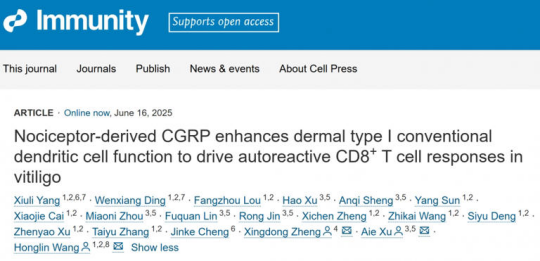
In June 2025, the team led by Wang Honglin from the First Affiliated Hospital of Shanghai Jiao Tong University School of Medicine, along with Professor Xu Aie from Hangzhou Third People’s Hospital, published a groundbreaking study titled "Nociceptor-derived CGRP enhances dermal type I conventional dendritic cell function to drive autoreactive CD8 T cell responses in vitiligo" in the Cell sub-journal Immunity. For the first time, it revealed a completely new pathogenic mechanism of the 'sensory neuron - CGRP - cDC1 - CD8 T cell' pathway, bringing a ray of hope to tens of millions of patients worldwide.
Even more exciting is that, from IL-15 monoclonal antibodies to neural signal inhibitors, from modified traditional Chinese medicine to targeted JAK inhibitors, four domestic innovative drugs are currently breaking through treatment bottlenecks from different targets. This 'skin color defense battle' concerning 30 million patients has now entered a crucial stage of multiple breakthroughs.
The Hidden Pain of 30 Million Patients: The Treatment Dilemma with No Available Drugs
"The white patches on my face are like an eraser, slowly rubbing away my confidence." This is a true account from a vitiligo patient. This autoimmune disease, characterized by the damage of melanocytes, affects 0.5%-2% of the global population, with about 30 million patients in China alone, and the number is increasing year by year.

Vitiligo treatment has long faced three major challenges:
Mechanistic Breakthrough: The Neuro-Immune Axis Unveils the Truth Behind Pathogenesis
Traditional views hold that vitiligo is caused by CD8 T cells directly attacking melanocytes, but the upstream regulatory mechanisms of the disease have remained unclear. After years of research, the team led by Wang Honglin finally solved this medical mystery. Through cross-validation using four cutting-edge technologies, the research team constructed a complete pathogenic pathway:
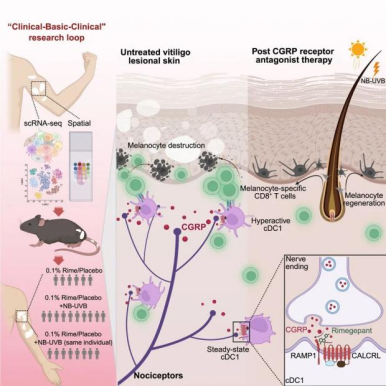
Based on these findings, the team proposed a new mechanism: CGRP (calcitonin gene-related peptide) secreted by sensory neurons in the skin binds to receptors on cDC1, enhancing their antigen-presenting ability, which in turn activates a large number of autoreactive CD8 T cells, ultimately leading to the death of melanocytes. This discovery of the 'sensory neuron - CGRP-cDC1-CD8 T cell axis' overturns traditional understandings of the pathogenesis of vitiligo.
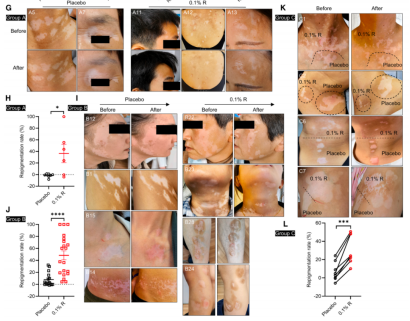
Assessing the therapeutic potential of CGRP receptor antagonists (Rimegepant) (Image source: Immunity)
Domestic New Drug Pipeline: Four Major Directions to Overcome Treatment Bottlenecks
If mechanism research is like lighting a lighthouse, then innovative drug development is the ship sailing toward the destination. Currently, four new domestic drugs have targeted different pathways, forming a diversified R&D matrix.
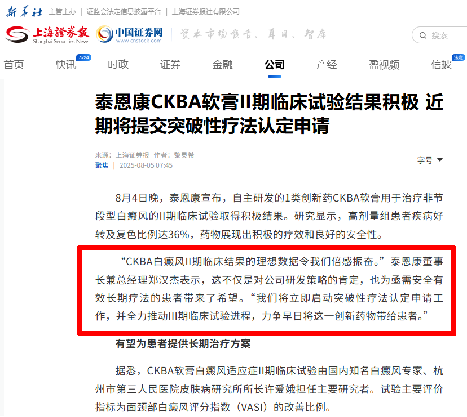
(2) Natural Innovation: CKBA Pioneers a New Path in Lipid Metabolism Regulation
(3) Precision Regulation: AhR Modulators Provide Triple Protection
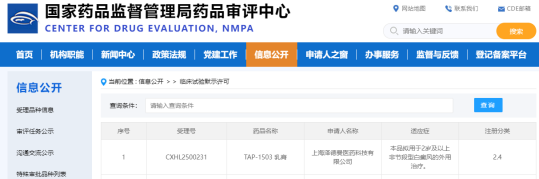
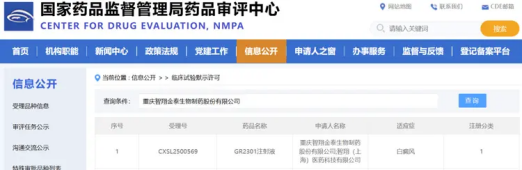
图片来源:中国国家药品监督管理局药品审评中心
(4) Targeted Upgrades: Continuous Iteration of the JAK Inhibitor Family
JAK inhibitors remain the main focus of current research and development, with ruxolitinib cream progressing the fastest domestically and expected to be the first to fill the market gap.
Competitive Landscape: Domestic Innovation Reshapes the Global Map
From the perspective of the R&D pipeline, the domestic innovative drug sector for vitiligo is characterized by 'few but high-quality' projects, with low competition within the field and leading internationally in several areas:
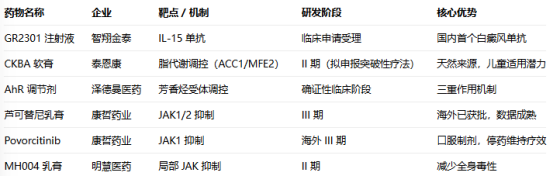
Compared with international research and development, domestic drugs show three major characteristics: first, innovation in natural products, such as the modernization path of traditional Chinese medicine exemplified by CKBA; second, diverse administration routes, with a high proportion of topical formulations, making them more suitable for treating skin diseases; third, a focus on local needs, with an emphasis on medications for special populations such as children. Industry experts predict that the next 3-5 years will be a boom period for the launch of innovative vitiligo drugs. As these drugs are gradually approved, China will shift from 'following' to 'running alongside' or even 'leading,' reshaping the global pattern of vitiligo treatment.
Animal Models: The Research Foundation of Vitiligo
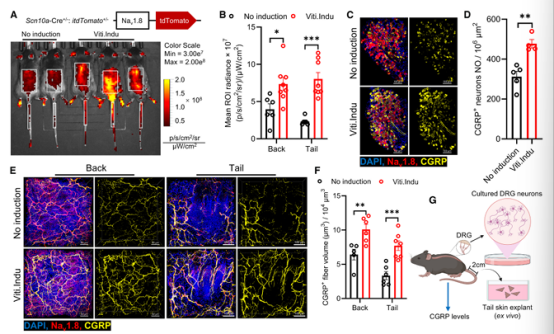
For patients, every step of progress in the development of these new drugs carries hope. Behind this, animal models serve as a crucial bridge connecting basic research and clinical application, providing indispensable scientific support for mechanism elucidation, drug screening, and efficacy validation, giving treatment breakthroughs a solid scientific foundation. At every key node in innovative vitiligo research, animal models play the core roles of 'touchstone' and 'navigator,' especially indispensable during the stages of mechanism analysis and preliminary drug screening. In studies revealing new pathogenic mechanisms, Wang Honglin's team combined the use of multiple genetically engineered mouse models to precisely regulate genes and validate the integrity of the pathogenic chain.
In the field of drug development, animal models serve as the "first checkpoint" for early efficacy evaluation. Before entering clinical trials, Chongqing Zhixiang Jintai's IL-15 monoclonal antibody GR2301 underwent preliminary validation in a vitiligo mouse model: after injecting the monoclonal antibody to block the IL-15 signaling pathway, the infiltration of autoreactive T cells in the skin of the model mice was significantly reduced, and the apoptosis rate of melanocytes decreased, providing key data support for subsequent clinical applications. Taienkang's CKBA ointment also demonstrated unique advantages in animal experiments. In a melanocyte injury model, the drug could significantly reduce the cytotoxic activity of CD8 T cells by regulating lipid metabolism, and no obvious skin irritation was observed in long-term dosing studies, laying the foundation for its entry into Phase II clinical trials.
Introduction to Zvast Biotechnology Vitiligo Model — Mouse Vitiligo Model Induced by Monobenzone Cream
Monobenzone is a commonly used skin depigmenting agent. As a tyrosinase activity inhibitor, it generates quinone semi-antigens through oxidation reactions upon contact with the skin. By inhibiting the activity of key enzymes in melanin synthesis, it reduces melanin production, ultimately causing loss of skin pigmentation. This depigmentation effect is not limited to the areas where the drug comes into contact but can also affect non-contact regions. In the induction of vitiligo models in mice, its core pathogenic mechanism begins with oxidative stress: oxidative stress first induces melanocytes to release damage-associated molecular patterns (DAMPs), which further activate the innate immune response, promoting activation of immune cells such as NK cells and DCs, ultimately triggering an adaptive immune response centered on CD8 T cells. These cells specifically attack and damage melanocytes, thereby simulating the pathological process of vitiligo.
Healthy SPF-grade C57BL/6 female mice were selected as experimental animals, with ages controlled between 6-8 weeks and body weights ranging from 15-25 g. The mice were first acclimated for 7 days, and after adapting to the environment, the black hair on their backs was removed and the experimental area was marked. The model was established through topical application, following a "synchronous treatment" protocol.
Model Building
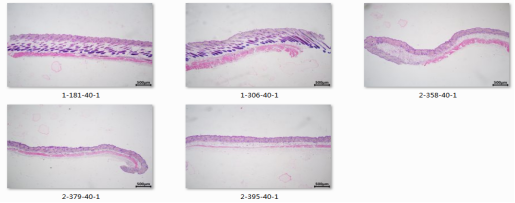
After the model was established, it was verified on the vitiligo model through HE staining. The results showed that the skin tissue structure of mice in the normal group was intact and well-layered, with no obvious pathological damage observed; compared with the normal group, the number of melanocyte-containing hair follicles in the skin of mice in the model group was significantly reduced, indicating successful model construction, and drug intervention was then initiated.
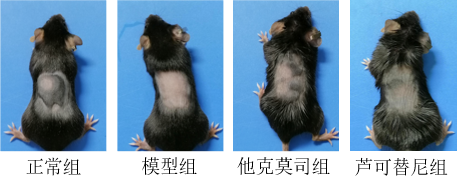
2. Body Weight Changes During Modeling and Treatment
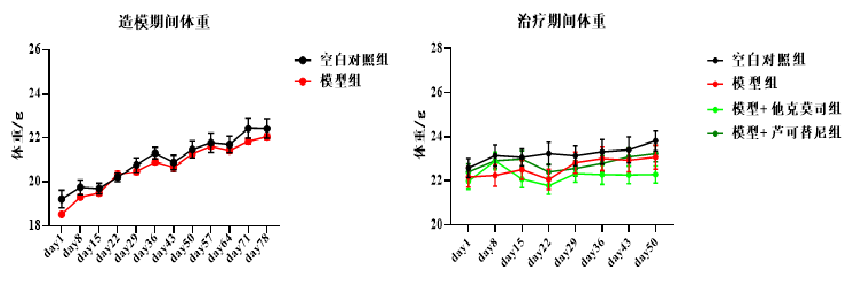
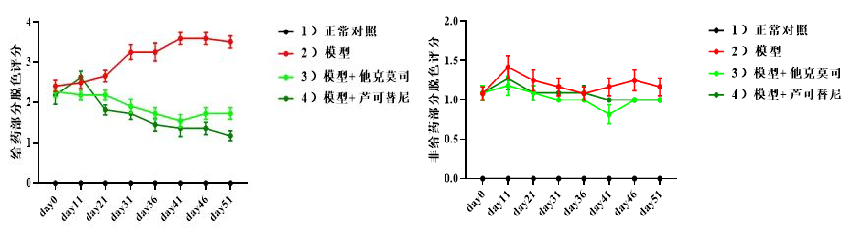
3. Decolorization Area Score
4. CD8 Immunofluorescence Staining

5. Serum ELISA Test
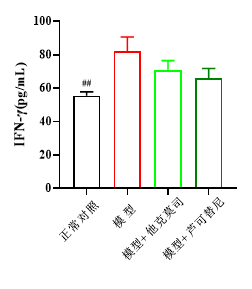
In summary, this model can effectively simulate the pathological features of vitiligo and the changes in related cytokines, validating the establishment of the model.