


2025 breakthroughs in sleep medicine:From Genetic Mechanisms to Advances in DORA-Class Drugs
Insomnia is a highly prevalent sleep disorder worldwide, primarily linked to the dysregulation of circadian clock genes, and is characterized by difficulties in falling asleep or maintaining sleep. Globally, 30%-40% of the population is affected by it, with the prevalence rate reaching 15%-21% in some Asian countries. There are approximately 200 million patients with insomnia disorders in China. Follow-up data mentioned in the 2025 Guidelines for the Diagnosis and Treatment of Insomnia Disorder released by the Chinese Sleep Research Society shows that the 10-year mortality rate of insomnia patients is significantly higher than that of the general population. Insomnia not only causes daytime fatigue and cognitive decline but also is associated with diseases such as anxiety, depression, hypertension, and diabetes, endangering public safety. However, only 6% of patients receive professional treatment, and existing drugs have side effects, so there is an urgent need for better treatment options.
Image source: unsplash
1. Why Does Insomnia Occur?
The pathogenesis of insomnia involves complex interactions between genetic susceptibility and environmental factors, among which the dysregulation of the sleep-wake mechanism is the main cause of insomnia. The core mechanism lies in the imbalance between overactivation of the wake-promoting system and weakened function of the sleep-promoting system: Hypocretin (Hcrt) neurons are overexcited or have abnormal activity, leading to increased release of wake-promoting neurotransmitters such as dopamine (DA), norepinephrine (NA), and histamine (HA), which continuously inhibit sleep initiation. At the same time, the sleep-driving pathways mediated by preoptic area (POA) GABAergic neurons and adenosine A2A receptors are hypofunctional and cannot effectively antagonize wake signals. In addition, the abnormal coordination of circuits between wake-promoting centers (such as the locus coeruleus (LC) and ventral tegmental area (VTA)) and sleep centers leads to increased cortical excitability and disorders in sleep-wake transitions, ultimately resulting in insomnia manifestations such as difficulty falling asleep and poor sleep maintenance.
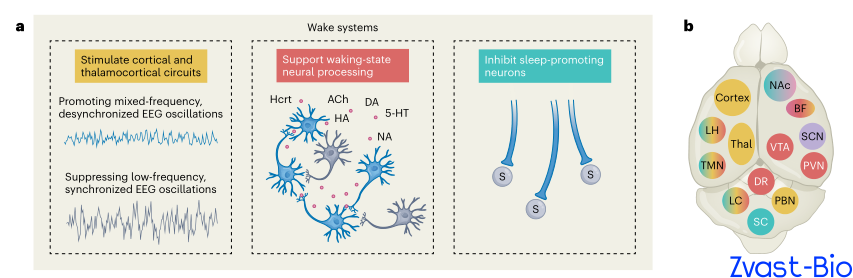
Image source: springernature
2. Key Breakthroughs in Insomnia Treatment Targets
From September 5 to 10, 2025, the 18th World Sleep Congress, held in Singapore, showcased a number of latest research advances in sleep-related mechanisms. Professor Russell Foster from the University of Oxford, UK, delivered a keynote speech, in which he deeply analyzed that a key molecule called SIK1 in the human brain is a critical factor causing sleep disorders related to light rhythm disturbances such as jet lag. He also introduced a new candidate drug CT1500 developed targeting this molecule, which has shown potential in treating jet lag. Japanese scientist Professor Hiroki R. Ueda revealed the role of calcium ions and phosphorylation in the sleep-wake cycle from a systems biology perspective. His research team used large-scale quantitative analysis techniques to identify the key nodes of the calcium signaling network in the regulation of the sleep-wake cycle. Professor Emmanuel Mignot from Stanford University and other renowned scholars published the latest research results on the orexin pathway and its therapeutic molecules for narcolepsy.
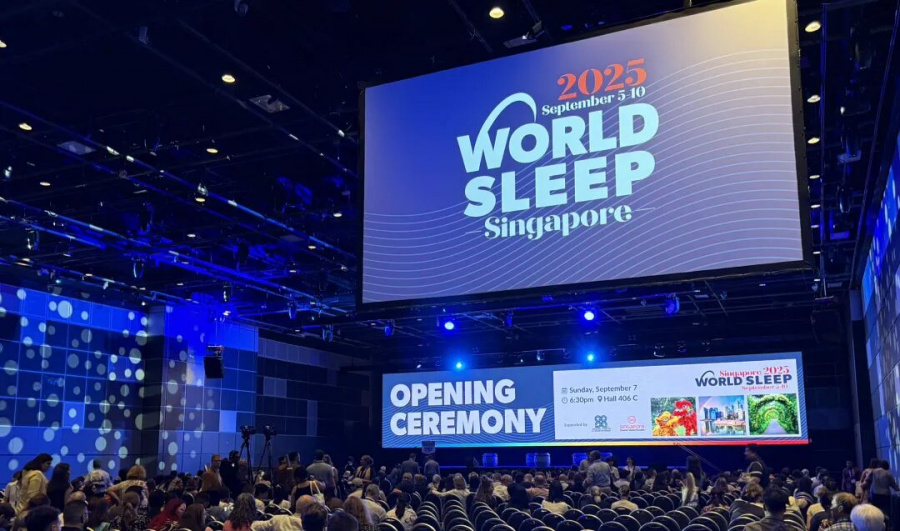
Image source: keesleep
On November 4, 2025, a team led by Academician Lin Lu from the Sixth Hospital of Peking University, in collaboration with Chinese and American research teams, published a review titled Brain-gut-microbiota interactions in sleep disorders in the journal Brain Medicine. This review systematically clarified the molecular mechanism by which gut microbiota regulates sleep disorders through the brain-gut axis, opening up a new "peripheral regulation of the central nervous system" track for insomnia treatment. Trillions of symbiotic microorganisms in the human gut communicate bidirectionally with the central nervous system through three pathways (immune, neural, and metabolic-endocrine), directly regulating the sleep-wake cycle. The review analyzed data from thousands of subjects and confirmed that various sleep disorders, such as chronic insomnia and obstructive sleep apnea syndrome, are accompanied by characteristic gut microbiota dysbiosis (including a reduction in beneficial bacterial genera and decreased microbial diversity), and this dysbiosis is positively correlated with the severity of symptoms.
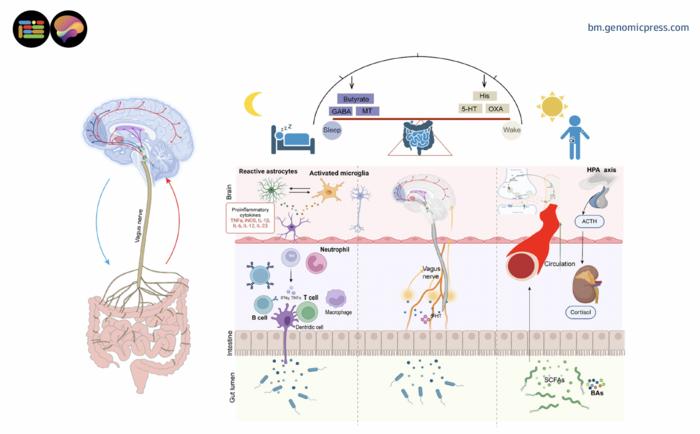
Image source: eurekalert
3. DORA-Class Drugs Launched in China
Daridorexant, a dual orexin receptor antagonist (DORA) co-developed with Daridorexant (Switzerland), became the focus of the "2025 China Sleep Medicine Development Forum" due to its phase III clinical data from both China and overseas, demonstrating the accelerated clinical translation in the field of insomnia treatment.

Image source: Simcere Pharmaceutical
As a new type of drug that precisely regulates the sleep-wake pathway, daridorexant induces physiological sleep by blocking the binding of orexin to its receptors, and its 8-hour half-life is consistent with the human circadian rhythm. Data from Chinese phase III clinical trials showed that after 206 patients took 50 mg of daridorexant every night, their sleep onset latency was reduced by 35.7 minutes, wake after sleep onset was decreased by 35.0 minutes, and subjective total sleep time was extended by 50.3 minutes. There were no residual effects the next day, and no withdrawal reactions occurred after drug discontinuation. This data has been published in the international top journal Sleep and has been unanimously recognized by Chinese and foreign experts.
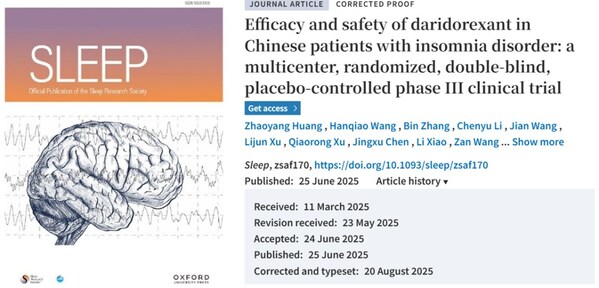
Image source: Bioon
Daridorexant has been launched in more than 10 countries worldwide and is the only DORA-class drug approved by the European Medicines Agency (EMA) to improve daytime function. It has received Grade A recommendations in two authoritative Chinese guidelines and is not classified as a controlled psychotropic substance. The National Key Laboratory of Neuropsychiatric and Oncologic Drug Research plans to invest 30 million yuan over three years to expand research on its application in patients with various comorbidities. Meanwhile, at the "China Sleep Summit Forum", lemborexant—the first dual orexin receptor antagonist approved in China—was also officially launched in China, forming a pattern of multiple breakthroughs in China’s insomnia treatment field.

Image source: People’s Voice
From the publication of clinical data to rapid approval and launch, and then to the expansion of follow-up research, the translation pace of DORA-class drugs marks a paradigm shift in insomnia treatment from traditional sedation to precise regulation, providing a better treatment option for hundreds of millions of insomnia patients.
4. Introduction to Zvastbio's Insomnia Model – Rat Insomnia Model
The PCPA-induced insomnia rat model is a currently recognized classic animal model, widely used in research on serotonin (5-HT) and its relationship with other neurotransmitters. p-Chlorophenylalanine (PCPA) is an effective inducer for establishing insomnia models; it reduces the level of serotonin by inhibiting tryptophan hydroxylase, thereby inducing sleep disorders.
Modeling Method
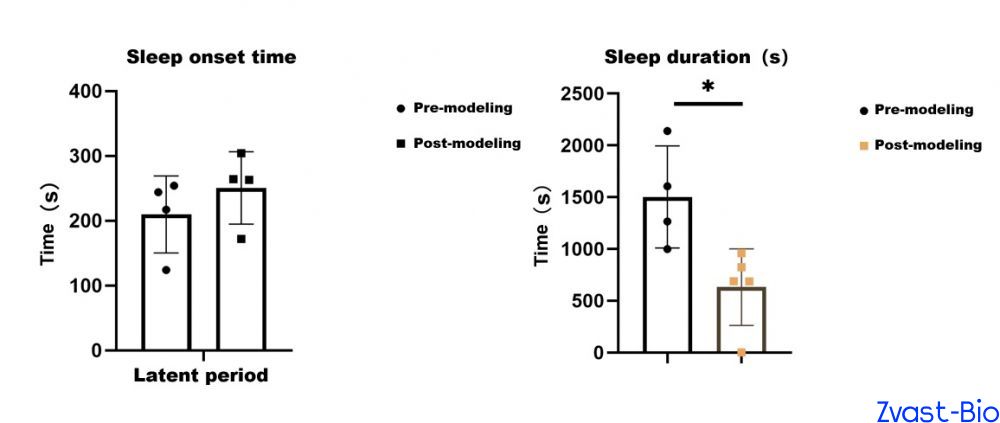
Male Sprague-Dawley (SD) rats aged 6 weeks were used. Before modeling, the sleep time and sleep onset time of the rats were measured once. After that, intraperitoneal injection of PCPA was administered once a day for 2 consecutive days, with a dose of 300 mg per kilogram of body weight. After injection, the sleep status and other behavioral manifestations of the rats were observed, and continuous monitoring was conducted within a certain period after injection. The success of modeling was determined by the prolongation of sleep latency and the shortening of sleep duration. Model animals may exhibit changes in behavior and general status, such as yellowing of hair, reduced food intake, easy awakening, and weight loss.
Modeling Cycle
2 days
Positive Control Drug
None
Model Validation
References
1.Sulaman, B.A., Wang, S., Tyan, J. et al. Neuro-orchestration of sleep and wakefulness. Nat Neurosci 26, 196–212 (2023). https://doi.org/10.1038/s41593-022-01236-w
2.Chinese Sleep Research Society. [Guidelines for the Diagnosis and Treatment of Insomnia Disorder (2025 Edition)]. Zhonghua Yi Xue Za Zhi (Chinese Medical Journal). 2025 Sep 9;105(34):2960–2981. (In Chinese) doi: 10.3760/cma.j.cn112137-20250421-00981. PMID: 40904305
3.The 18th World Sleep Congress: Molecules related to new sleep mechanisms such as orexin attract attention. CCTV News. 2025 Sep 9. https://news.cctv.com/2025/09/11/ARTI9WXywx1NTW8oP70QGiDt250911.shtml
4.Han Y, Yuan K, Zheng Y, Lu L. Orexin Receptor Antagonists as Emerging Treatments for Psychiatric Disorders. Neurosci Bull. 2020 Apr;36(4):432–448. doi: 10.1007/s12264-019-00447-9. Epub 2019 Nov 28. PMID: 31782044; PMCID: PMC7142186