


Multiple Breakthroughs in Depression Treatment Achieved in 2025, with Artificial Intelligence Solutions Shining Brightly
According to statistics from the World Health Organization (WHO), more than 300 million people worldwide suffer from depression, and the incidence rate of depression in women is approximately 1.5 times that in men. Globally, over 10% of pregnant and postpartum women experience depression. Suicide is the third leading cause of death among people aged 15 to 29. Major depressive disorder imposes an annual socioeconomic burden of approximately 326.2 billion dollars in the United States.

Image source: unsplash
However, existing treatments still face numerous bottlenecks. The response rate of first-line drugs is only 40%-65%, about one-third of patients are classified as refractory cases, and there are problems such as slow onset of action and obvious side effects, which seriously affect treatment adherence. For tens of millions of patients, R&D breakthroughs are never merely industry progress, but a beacon of hope illuminating the predicament. These explorations are not only committed to addressing the pain points of existing treatments but also providing precise solutions for different subtypes and special populations.
Latest Progress in Antidepressant Drug R&D
On October 30, Jiangsu Jibeier Pharmaceutical Co., Ltd. (hereinafter referred to as "Jibeier") simultaneously disclosed its 2025 Q3 financial report and the progress of its core research pipeline: its independently developed Class 1 new antidepressant drug JJH201501 has successfully completed Phase III clinical trials. The results show that its efficacy is significantly superior to the placebo group, and it demonstrates outstanding potential in safety indicators compared to vortioxetine, a commonly used clinical drug.
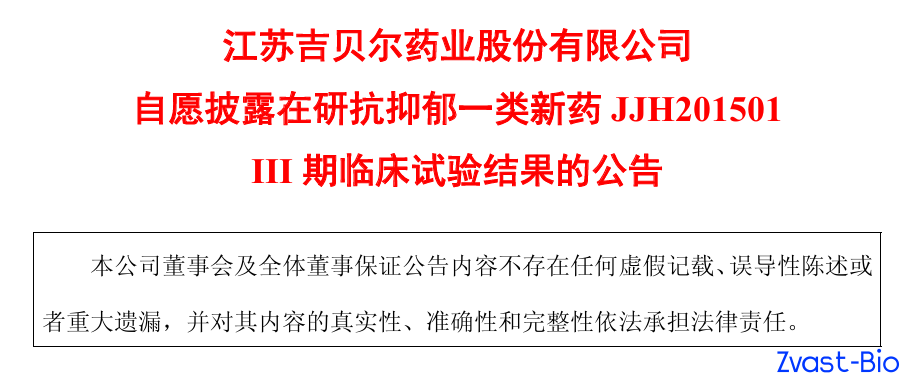
Image source: static.cninfo
In addition, NBI-1070770, an investigational antidepressant jointly developed by biopharmaceutical company Neurocrine Biosciences and Takeda Pharmaceutical, did not meet the preset primary endpoint in Phase II clinical trials. However, the drug was well-tolerated with no serious adverse events reported, and the company will continue to analyze data to determine the subsequent direction. Furthermore, Neurocrine has other layouts in the field of depression: its other drug osavampator has announced positive Phase II data and initiated Phase III clinical trials in January 2025.
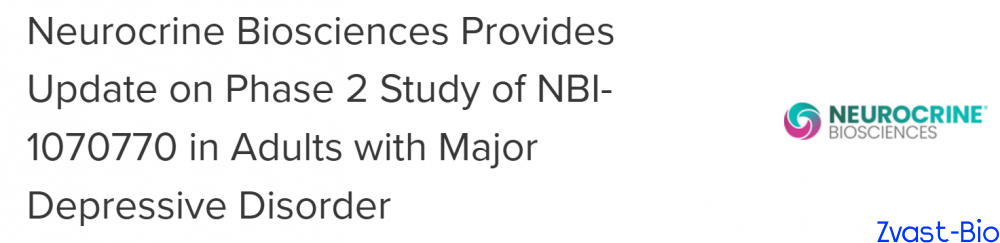
Image source: prnewswire
New Mechanisms for Depression Treatment
A single subanesthetic dose of ketamine can produce rapid, significant, and long-lasting antidepressant effects, and electroconvulsive therapy (ECT) is also a rapidly acting antidepressant intervention. However, the mechanisms of action of both have long been unclear.
On November 5, 2025, the team led by Luo Minmin from the Beijing Institute of Brain Science and Brain-Inspired Intelligence published a study titled "Adenosine signalling drives antidepressant actions of ketamine and ECT" in Nature, revealing that adenosine signalling is the core pathway through which these two therapies exert their antidepressant effects.
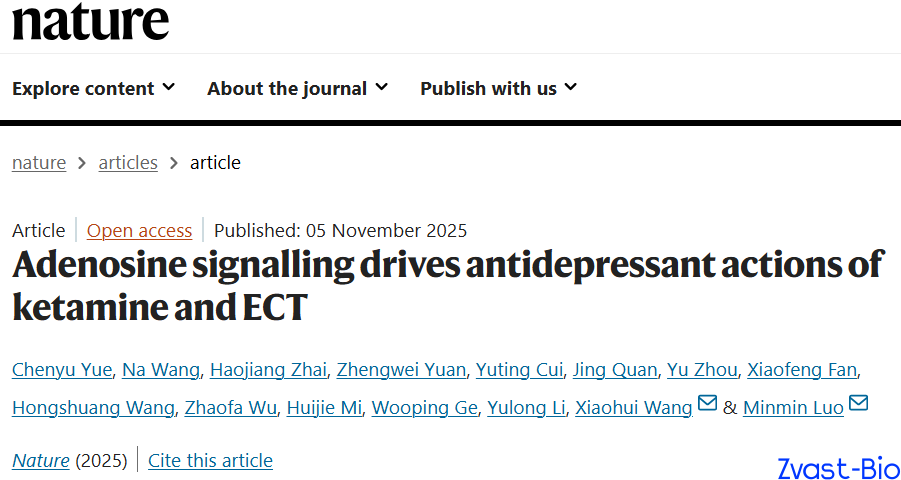
Image source:nature
Through mouse models, the study found that ketamine and ECT trigger a strong surge of adenosine in key emotion-regulating brain regions, including the medial prefrontal cortex (mPFC) and hippocampus. Genetic or pharmacological disruption of A1 and A2A adenosine receptors eliminates the antidepressant effects of both, and adenosine signalling in the mPFC specifically drives antidepressant actions. Among them, ketamine increases adenosine levels by regulating cellular metabolism. Based on this, the research team has developed ketamine derivatives with better antidepressant effects and fewer side effects. In addition, acute intermittent hypoxia, a non-pharmacological intervention, can also produce antidepressant effects by increasing brain adenosine levels. This study confirms that adenosine is a key mediator of rapid-acting antidepressant drugs/therapies and an actionable target for the treatment of major depressive disorder, providing important evidence for the development of scalable non-invasive antidepressant therapies.
Furthermore, with the rapid advancement of artificial intelligence (AI) technology, it has been integrated into multiple fields such as education, finance, and healthcare, demonstrating strong capabilities in improving efficiency and enabling precise decision-making. Nowadays, it is natural to consider applying AI to the field of mental health, with the aim of breaking through the problems existing in traditional treatments through the analysis of massive clinical data.
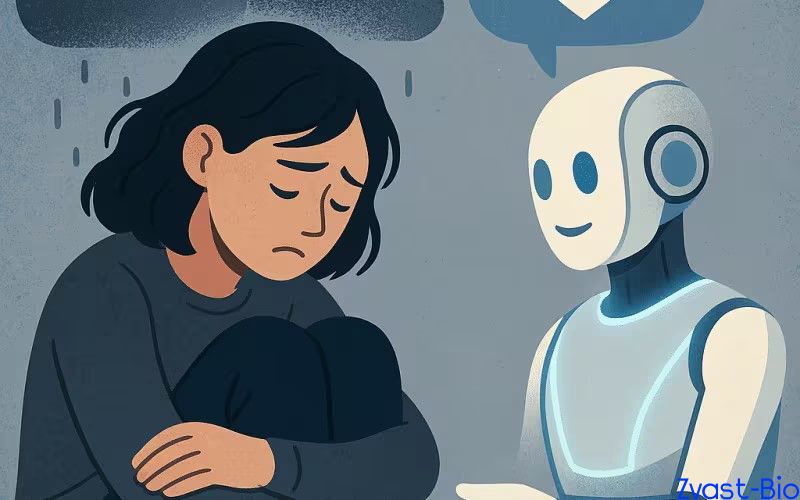
Image source:winss
Artificial Intelligence + Multimodal Information Combined Screening for Depression
A study published in a Nature sub-journal by the Biomedical Engineering Department of Ocean University of China, titled "Development of the treatment prediction model in the artificial intelligence in depression–medication enhancement study," shows that the AI-assisted method combining physiological and behavioral information is significantly superior to unimodal methods in depression screening. It emphasizes the great potential of AI algorithms in multimodal depression screening. Despite challenges such as the risk of false positives and false negatives, data privacy and security issues, and regulatory approval requirements, AI remains an important tool to assist doctors in diagnosis.
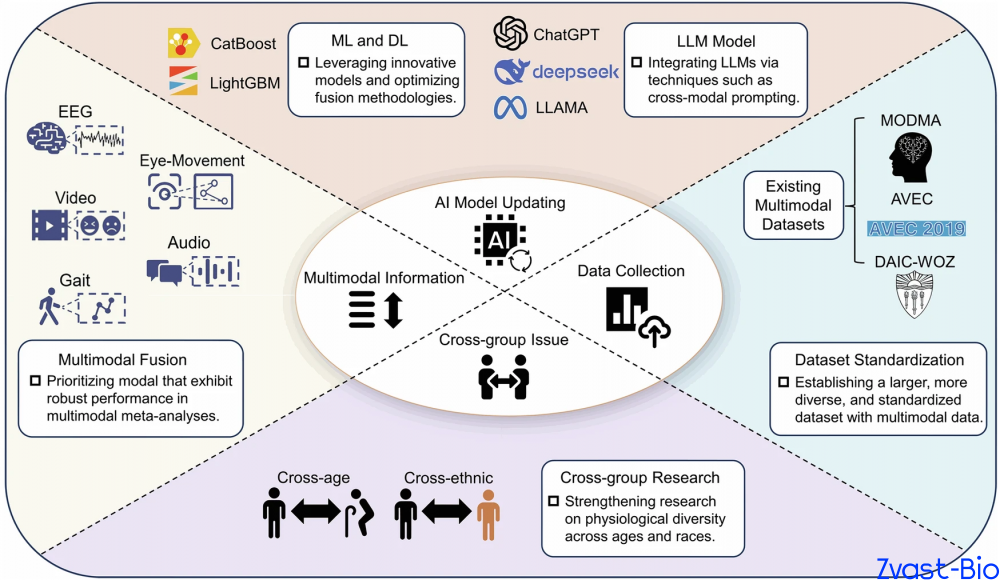
Image source:npj
Artificial Intelligence + Drug Combined Treatment for Depression
On June 23, 2025, the latest study titled "Development of the treatment prediction model in the artificial intelligence in depression - medication enhancement study," jointly published by institutions including McGill University in Canada, Aifred Health, and Google in a Nature sub-journal npj Mental Health Research, developed an AI model that achieves precise prediction of the efficacy of 10 antidepressants for the first time, ushering depression treatment from an era of "empirical trial and error" to an era of "intelligent matching"!
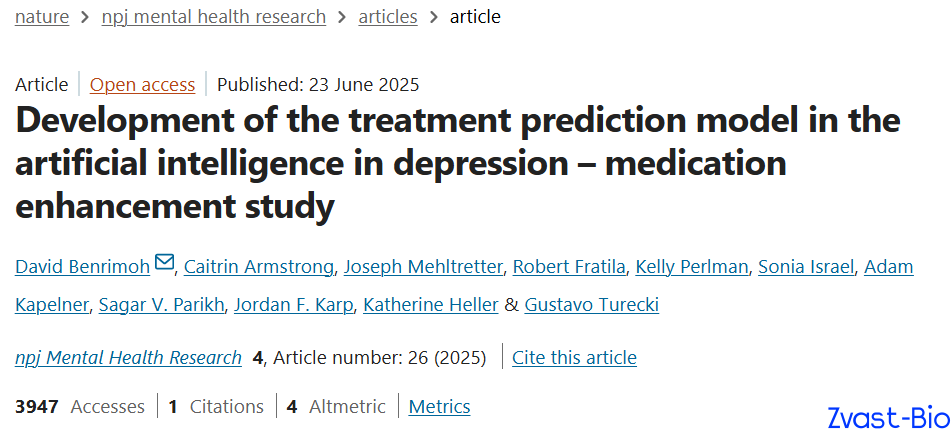
Image source:npj
Unlike previous tools that could only predict the efficacy of 1-2 drugs, the "AID-ME Model" (Artificial Intelligence in Depression – Medication Enhancement) was trained on clinical trial data of 9,042 patients with moderate to severe depression, covering 8 first-line monotherapies (such as citalopram) and 2 commonly used combination therapy regimens. It is currently the AI prediction tool for depression covering the most types of drugs. At present, this AI model is deployed as a static model in the Aifred Clinical Decision Support System (Aifred CDSS) as part of the Artificial Intelligence in Depression – Medication Enhancement (AID-ME) study (NCT04655924). The research team also acknowledges that the model still has room for improvement: for example, the current data mainly comes from populations in North America and Western Europe, and more regional data needs to be included in the future to adapt to different ethnic groups; in addition, not all first-line drugs (such as vortioxetine) are covered, and more data will be supplemented later to improve the model.
Undeniably, this combination of "AI + drugs" has opened a new door for depression treatment!
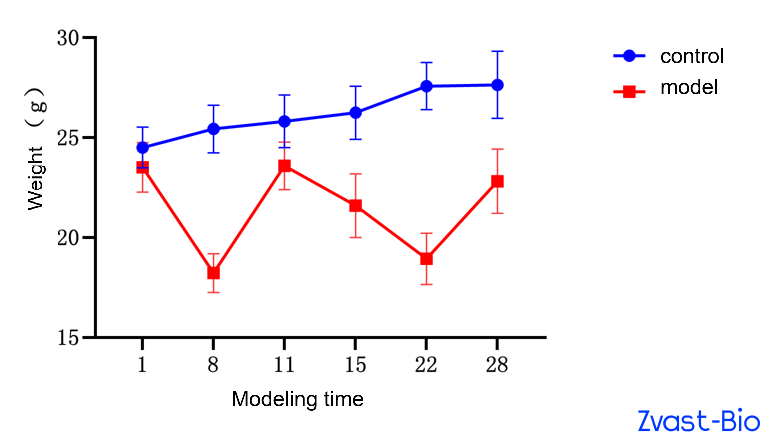
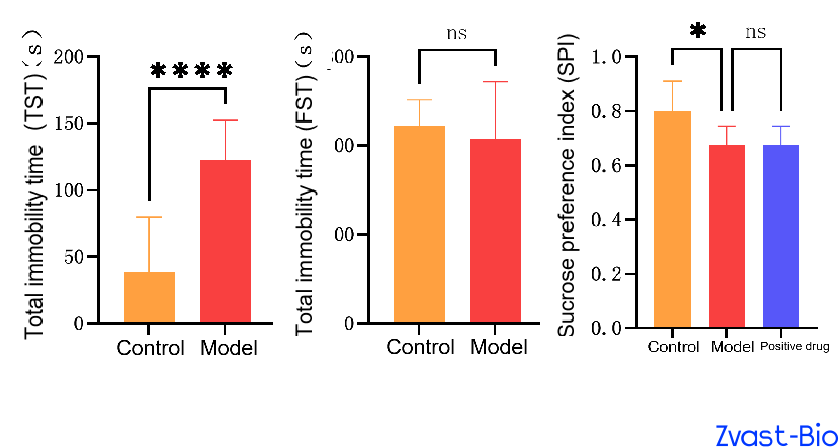
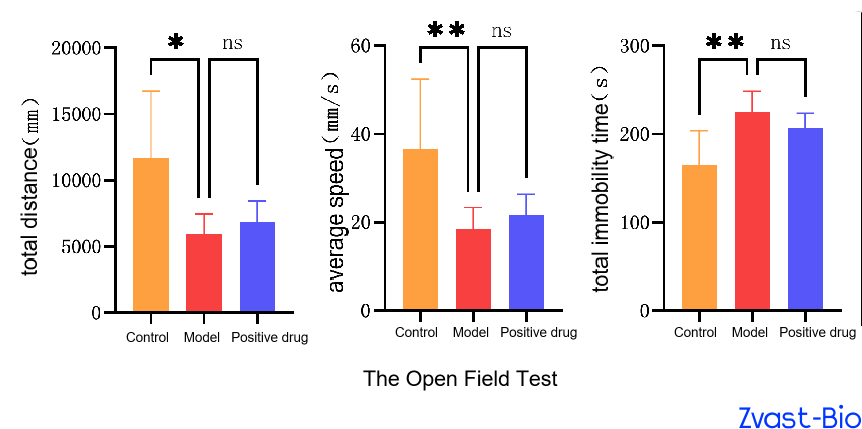
Introduction to Zvast Biotechnology’s Insomnia Model – Mouse Depression Model
Experimental animals: C57BL/6 mice (male, 8 weeks old, approximately 22 g)
Modeling method: Mice in the model group were exposed to a corticosterone environment for 4 weeks. Meanwhile, chronic unpredictable mild stress (CUMS) was applied.
Modeling cycle: 4 weeks
Positive drug: Fluoxetine
Model validation
References:
1. World Health Organization. "Depressive disorder (depression)." WHO News Room, 29 Aug. 2025, https://www.who.int/news-room/fact-sheets/detail/depression.
2.Heinz, Michael V., Daniel M. Mackin, Brianna M. Trudeau, et al. 2025. "Randomized trial of a generative AI chatbot for mental health treatment." NEJM AI 2, no. 4: https://doi.org/10.1056/AIoa2400802.
3.Benrimoh D, Armstrong C, Mehltretter J, Fratila R, Perlman K, Israel S, Kapelner A, Parikh SV, Karp JF, Heller K, Turecki G. Development of the treatment prediction model in the artificial intelligence in depression - medication enhancement study. Npj Ment Health Res. 2025 Jun 23;4(1):26. doi: 10.1038/s44184-025-00136-8. PMID: 40550942; PMCID: PMC12185704.
4.Benrimoh D, Armstrong C, Mehltretter J, Fratila R, Perlman K, Israel S, Kapelner A, Parikh SV, Karp JF, Heller K, Turecki G. Development of the treatment prediction model in the artificial intelligence in depression - medication enhancement study. Npj Ment Health Res. 2025 Jun 23;4(1):26. doi: 10.1038/s44184-025-00136-8. PMID: 40550942; PMCID: PMC12185704.
5.Yue, C., Wang, N., Zhai, H. et al. Adenosine signalling drives antidepressant actions of ketamine and ECT. Nature (2025). https://doi.org/10.1038/s41586-025-09755-9