


Global First! mRNA Therapy Holds Promise for Reversing Cataract
Cataract is the world's leading cause of blindness. When the "lens" in the eye becomes clouded, clear vision becomes a luxury — this is the core challenge posed by cataracts. According to data from the White Paper on Cataract Prevention and Treatment for Eye Health in China, the prevalence rate among people over 60 in China reaches as high as 80%. The number of adult patients had already hit 130 million by 2020 and is projected to exceed 240 million by 2050. Importantly, cataracts are not exclusive to the elderly: ultraviolet radiation, diabetes, hypertension, smoking, excessive alcohol consumption, and inappropriate use of hormones can all accelerate its onset. Congenital and traumatic cases also require vigilance. The core mechanism underlying cataracts is the denaturation and opacification of lens proteins.

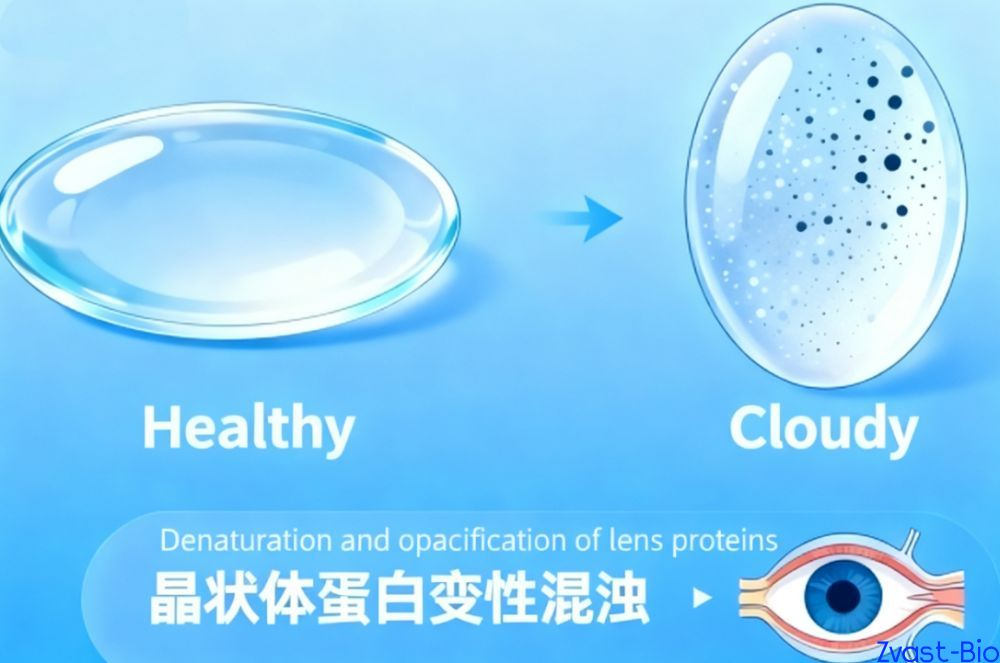
Image source: Internet
As clearly stated in the Guidelines for Cataract Extraction Surgery in Chinese Adults, 90% of patients can regain clear vision through standardized treatment. Currently, mainstream interventions fall into two categories: in the early stage, eye drops (such as bendazac lysine and glutathione) are used to slow disease progression; in the middle and advanced stages, minimally invasive surgeries like phacoemulsification and femtosecond laser-assisted surgery are performed to remove the cloudy lens and implant an intraocular lens (IOL). The Guidelines emphasize "precision classification + early diagnosis and treatment," noting that medications can only delay early progression, while surgery remains the sole curative treatment.
Traditional Therapeutic Drugs for Cataract
As clearly defined in the Guidelines for Cataract Extraction Surgery in Chinese Adults (2023), no medication can reverse lens opacification. Drugs are only indicated for early-stage patients with a LOCSⅢ grade < 2, and their core value lies in delaying disease progression.
1. Western Medicine Eye Drops
Bendazac lysine: Indicated for early age-related and metabolic cataracts.
Glutathione: Effective for mild to moderate cortical cataracts.
Pirfenoxine (Baineting): Suitable for incipient posterior subcapsular cataracts.
2. Oral Traditional Chinese Medicine (TCM)
Qiju Dihuang Wan: Targets early-stage patients with liver-kidney yin deficiency syndrome. When used in combination with western medicine, the rate of slowing opacification progression is 15% higher than that of western medicine alone.
3. Adjuvant Supplements
Vitamin C + Vitamin E: Can reduce the risk of cataracts by 23% in high-risk groups, but they cannot replace therapeutic drugs.
From Drug-Mediated Delay to Root-Cause Repair: The Mature Layout of mRNA Technology and New Possibilities for Cataract
While traditional drugs still focus on "delaying" progression, mRNA technology has advanced toward "repairing" the root cause. From its blockbuster success with COVID-19 vaccines to the global first RSV-mRNA vaccine advancing to Phase III trials, this "human body printer" has achieved mature breakthroughs in three core therapeutic areas: infectious diseases, oncology, and rare diseases:
1. Tumor Immunotherapy
BioNTech’s BNT111 (for melanoma) and Moderna’s mRNA-4157 (personalized cancer vaccine) have both received FDA Breakthrough Therapy Designation. A single mRNA molecule encodes dozens of neoantigens, activating T cells to precisely eliminate cancer cells.
2. Protein Replacement Therapy
Moderna’s mRNA-3927 enables the liver of patients with propionic acidemia to "self-produce" the missing enzyme. Phase II clinical results showed that liver transplantation was no longer required for patients. Pipelines for cystic fibrosis and hemophilia are closely following.
3. In Vivo Gene Editing
CRISPR-Cas9 mRNA-LNP (lipid nanoparticle) delivery directly to the liver: Intellia’s NTLA-2001 edits the TTR gene in vivo, reducing serum TTR levels by 90% in patients with ATTR amyloidosis—one injection replaces lifelong blood transfusions.
These cross-disciplinary technological accumulations have laid a solid foundation for advancing mRNA-based cataract therapies from animal experiments to clinical applications.
Cataract remains the world’s leading cause of blindness, and surgery is still the only curative treatment available. However, over 80% of patients globally cannot access surgery due to various barriers, especially in resource-constrained regions. Is there a non-surgical, pharmaceutical alternative? Chinese scientists have delivered a promising answer.
Latest Research Breakthrough: mRNA Therapy Reverses Cataract
A research team based in Shenzhen published a groundbreaking study in Nature Communications titled "Ocular delivery of lipid nanoparticles-formulated mRNA encoding lanosterol synthase ameliorates cataract in rats". In rat models, the study achieved reversal of lens opacification, with the cataract grade in the treatment group improving by over 50%.The team developed an mRNA drug encapsulated in lipid nanoparticles (LNP), which encodes the human-derived lanosterol synthase (hLSS) protein. This protein promotes the synthesis of lanosterol—a key molecule that maintains lens transparency and prevents protein aggregation.
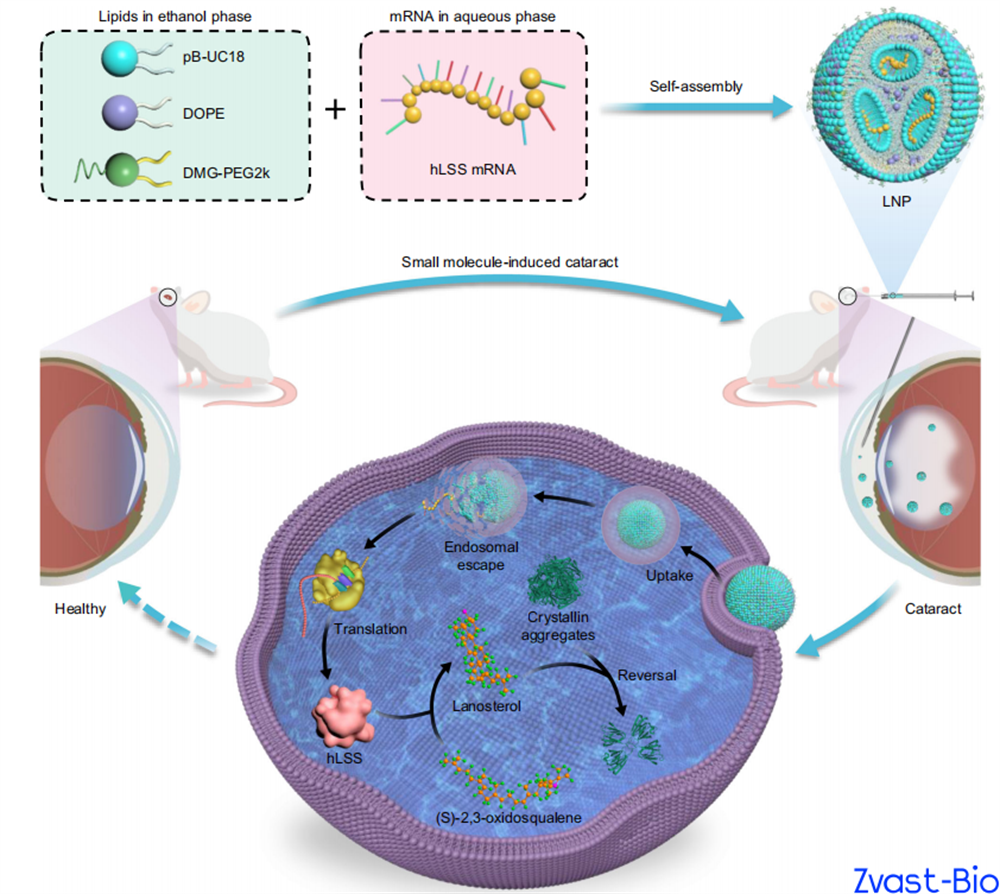


Image Source Nature Communications
Using SD rat models of nuclear cataract induced by sodium selenite and diabetic cataract induced by galactose, local delivery of pB-UC18 LNPs loaded with hLSS mRNA was administered to the rat lenses in the experimental group before and after cataract formation, while the control group received an equal dose of empty vector. The results demonstrated that the mRNA drug could effectively prevent and even reverse the progression of nuclear cataract.
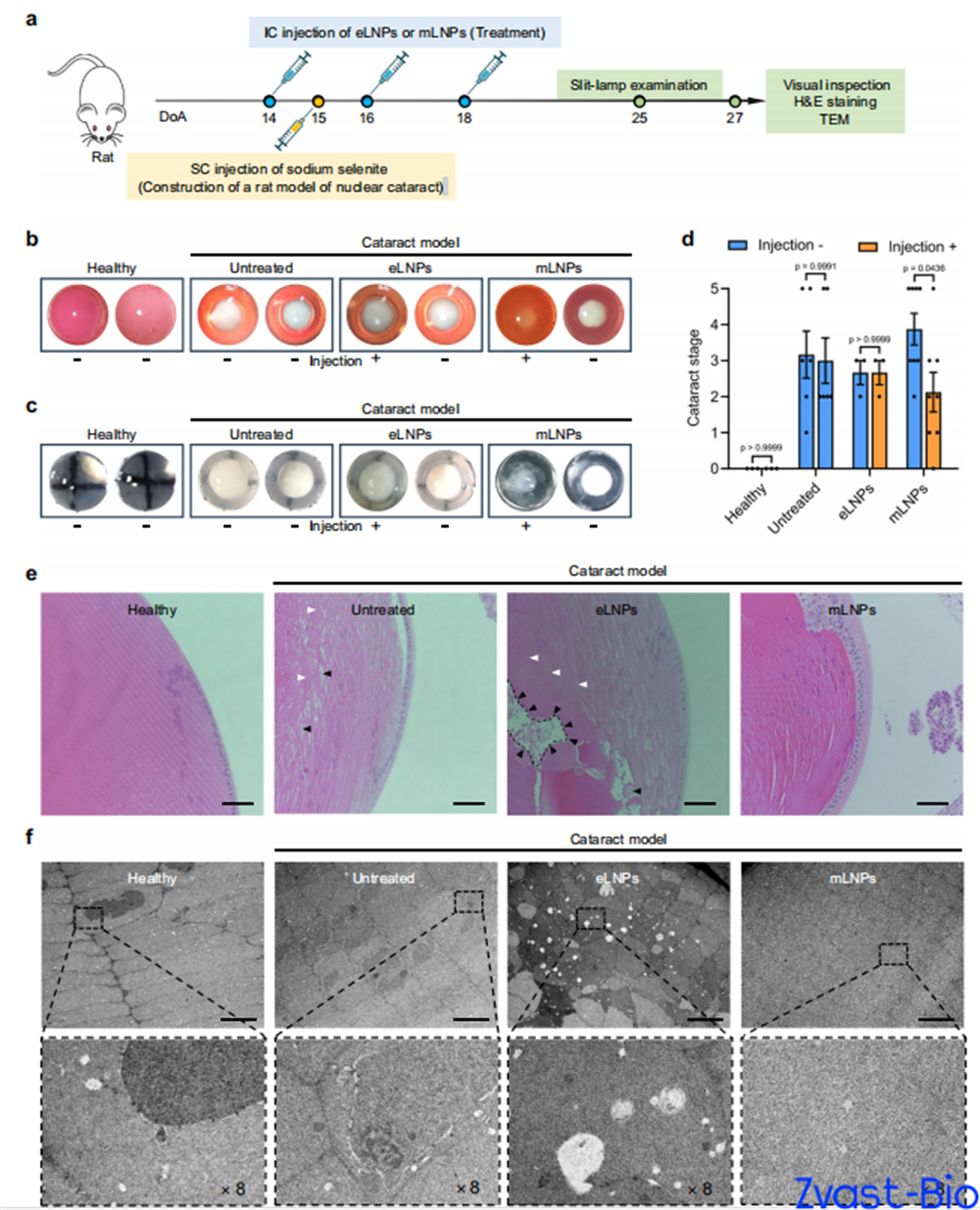

Image Source Nature Communications
From Efficacy Verification in Early Cataract Drug Screening and Technological Iteration of Standardized Surgery to the Groundbreaking Progress of mRNA Reversal Therapy Today, Animal Models Remain the "Bridge" Connecting Basic Research and Clinical Application.They enable researchers to explore disease mechanisms, test therapeutic regimens, and mitigate potential risks in a controlled environment, laying a solid foundation for the safety and efficacy of the clinical translation of every cataract treatment technology.
Introduction to Zvast Biotechnology’s Cataract Model——Selenium-Induced Cataract Model
Model Establishment:SD rat pups.Rats in the model group received subcutaneous injections at the nape of the neck, administered every other day for a total of three injections. The normal control group was injected with an equal volume of normal saline.
Results:The normal control group exhibited an intact and structurally normal lens without significant pathological changes. In contrast, the model group showed obvious abnormalities: partial detachment and loose arrangement of lens epithelial cells, swelling of peripheral lens fibers, and vacuole formation between edematous cells. Notably, the modeling efficacy was relatively superior in the medium and high-dose groups compared to the low-dose group.
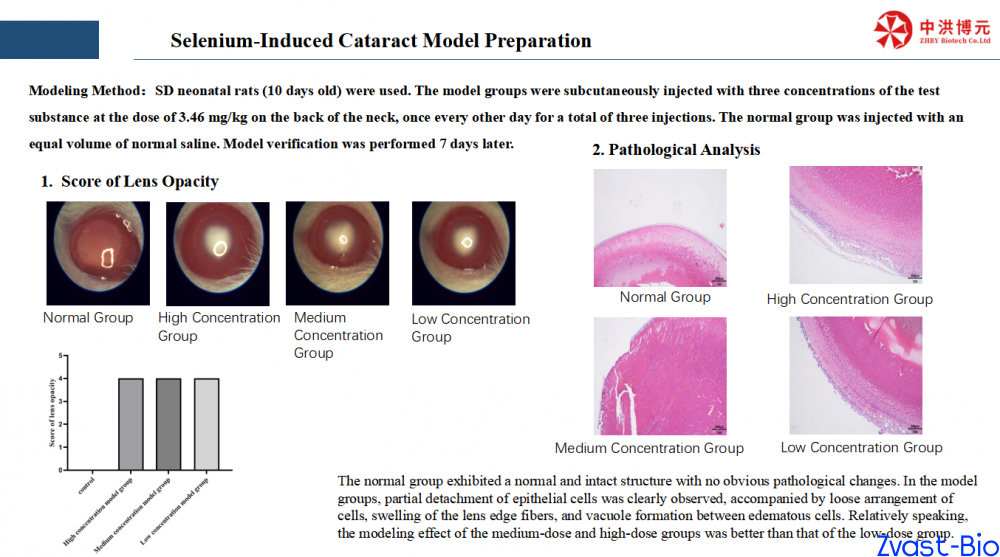

Introduction to Zvast Biotechnology’s Cataract Model——D-Galactose-Induced Cataract Model
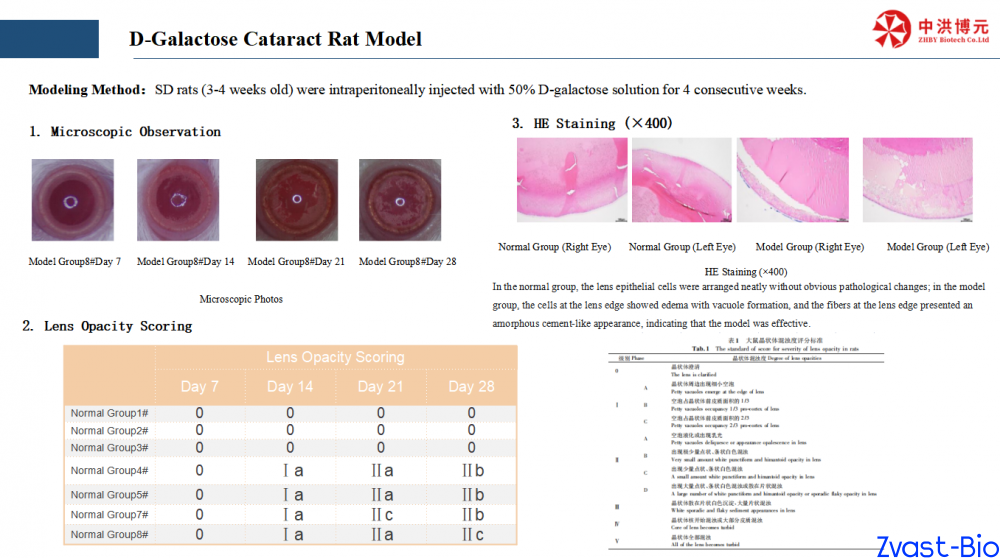
Model Establishment:SD rats,Intraperitoneal injection of D-galactose solution was administered continuously for several weeks.
Results:In the normal control group, the lens epithelial cells were arranged neatly with no significant pathological changes. In contrast, the model group showed obvious abnormalities: edema of the peripheral lens cells, vacuole formation, and amorphous cement-like changes in the peripheral lens fibers, indicating a successful model establishment.

References:
[1]Chen SP, Woreta F, Chang DF. Cataracts: A Review. JAMA. 2025 Jun 17;333(23):2093-2103. doi: 10.1001/jama.2025.1597. PMID: 40227658.
[2]Song R, Lin Y, Zhang M, Liu Z, Zhang R, Zhao J, Li B. Ocular delivery of lipid nanoparticles-formulated mRNA encoding lanosterol synthase ameliorates cataract in rats. Nat Commun. 2025 Sep 26;16(1):8522. doi: 10.1038/s41467-025-63553-5. PMID: 41006301; PMCID: PMC12474983.