Parkinson Disease Is No Longer a Hopeless Condition: How Far Have We Come from Levodopa to Stem Cell Therapy?
PD: The "Silent Killer" Amid Aging
Parkinson's disease (PD) is one of the most common chronic, progressive neurodegenerative diseases of the central nervous system, with an incidence second only to Alzheimer’s disease (AD). Clinically, it is mainly characterized by bradykinesia, resting tremor, postural instability, and muscle rigidity. According to the China Parkinson's Disease Report 2025, the number of existing PD patients in China has exceeded 5 million, accounting for approximately 40% of the global total. It is projected to surpass 10.5 million by 2050.

Images sourced from the Internet
The pathogenesis of PD is complex, resulting from the combined effects of multiple factors including genetic factors, environmental factors, nervous system aging, and pathological abnormalities at the molecular and cellular levels. The core pathological changes are the progressive degeneration and death of dopaminergic neurons in the substantia nigra pars compacta of the midbrain, accompanied by the abnormal aggregation of α-synuclein(α-syn) to form Lewy bodies (LB). Ultimately, this leads to dopamine deficiency in the striatum and imbalance of the basal ganglia neural circuitry, which is also the core cause of motor symptoms such as hand tremors and bradykinesia in patients.
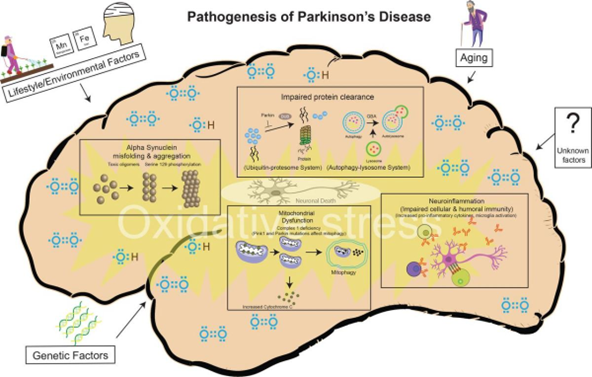
Images sourced from JNP
Pharmacological Treatment: From Levodopa to Novel Inhibitors
The discovery of levodopa represents a crucial milestone in the history of PD treatment. However, after long-term use, most patients develop dyskinesia—a complication characterized by involuntary movements. In recent years, pharmaceutical companies such as Biogen, Roche, and Sanofi have invested in dozens of PD drugs targeting α-synuclein or LRRK2. Nevertheless, a large number of these candidates failed in Phase II/III clinical trials due to insufficient efficacy or safety concerns, including Biogen's BIIB054 (Phase II failure in 2021), Sanofi's Venglustat (Phase II failure in 2021), and Biogen/Denali's BIIB122 (Phase III termination in 2023).
Opicapone is a third-generation, highly selective, and long-acting catechol-O-methyltransferase (COMT) inhibitor. It is also the world's first COMT inhibitor requiring only once-daily administration, approved by the U.S. Food and Drug Administration (FDA) in 2020 and introduced by Fosun Pharmaceutical for market launch in 2025. Its COMT inhibition rate exceeds 95%, significantly higher than that of entacapone (70%), a second-generation COMT inhibitor.
Stem Cells Transform the Treatment Pattern of PD
On October 28, the Second Affiliated Hospital of Zhejiang University School of Medicine successfully performed the first autologous induced pluripotent stem cell (iPSC)-derived dopaminergic progenitor cell transplantation in Zhejiang Province. This technology involves collecting the patient's own skin or blood cells, reprogramming them into iPSCs, which are then directionally differentiated into dopaminergic progenitor cells. After transplantation, these cells can replace damaged neurons and secrete dopamine, thereby repairing the neural circuit from the root cause. It avoids the risk of immune rejection associated with allogeneic transplantation and can accurately meet the individual needs of the patient.
A follow-up examination conducted three months after the surgery showed that the motor score of the patient on the Unified Parkinson's Disease Rating Scale (UPDRS) decreased by 42% compared with that before the operation. Symptoms such as tremor and muscle rigidity basically disappeared, and the patient was able to walk independently and complete daily activities, achieving a remarkable improvement from being "unable to take a single step" to "being able to take care of oneself".
This phased achievement marks a crucial step forward for China in the field of cell replacement therapy for PD. In the future, this technology is expected to help more patients break free from the shackles of PD and embrace the hope of "rebirth".
How Do PD Animal Models Facilitate New Drug Development?
As a core tool for simulating human disease progression, verifying drug efficacy, and exploring molecular mechanisms, animal models play a pivotal role in PD research. Currently, common PD animal models include the following:
(1) Chemotoxin-induced models: Such as MPTP and 6-OHDA models. These models selectively damage dopaminergic neurons through exogenous neurotoxins, rapidly mimicking the pathological features of sporadic PD (e.g., neuronal death, dopamine reduction). They are suitable for drug screening (e.g., preliminary validation of levodopa-based drugs).
(2) Genetically modified models: Such as α-synuclein (α-Syn) transgenic models with the A53T mutation. By simulating gene mutations associated with familial PD via gene editing, these models are used to investigate the role of genetic factors in PD pathogenesis and develop drugs targeting specific genes. However, they have a long modeling cycle (mice require 6–12 months to develop pathological changes).
(3) α-Synuclein preformed fibril (PFF) injection models: These models mimic the pathological α-Syn propagation characteristics of PD. Their limitations include a prolonged modeling cycle and high operational costs.
From the launch of levodopa in 1967, which ushered in the era of "symptomatic treatment," to the breakthrough of "functional repair" achieved by autologous iPSC therapy in 2025, PD treatment has undergone nearly 60 years of development. Despite ongoing challenges in the development of novel drugs targeting pathological mechanisms, the rise of technologies such as stem cell therapy and gene editing is transforming the "radical cure of PD" from a dream into a reality.
Zvast Bio Mouse Parkinson’s Disease Model
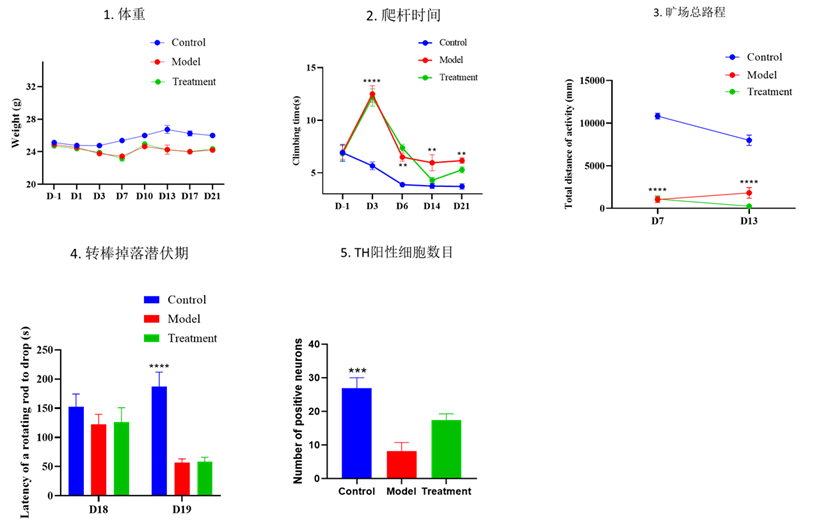
1.MPTP-Induced Parkinson's Disease (PD) Mouse Model
Animals: C57BL/6 Mice
Modeling: C57BL/6 mice were intraperitoneally injected with 30 mg/kg of MPTP solution once daily.
Positive Control: Levodopa
Model Validation:
Zvast Bio Rat Parkinson’s Disease Model
Animals: Sprague-Dawley (SD) Rats
Modeling: 6-OHDA was injected into the substantia nigra pars compacta (SNpc) of rats
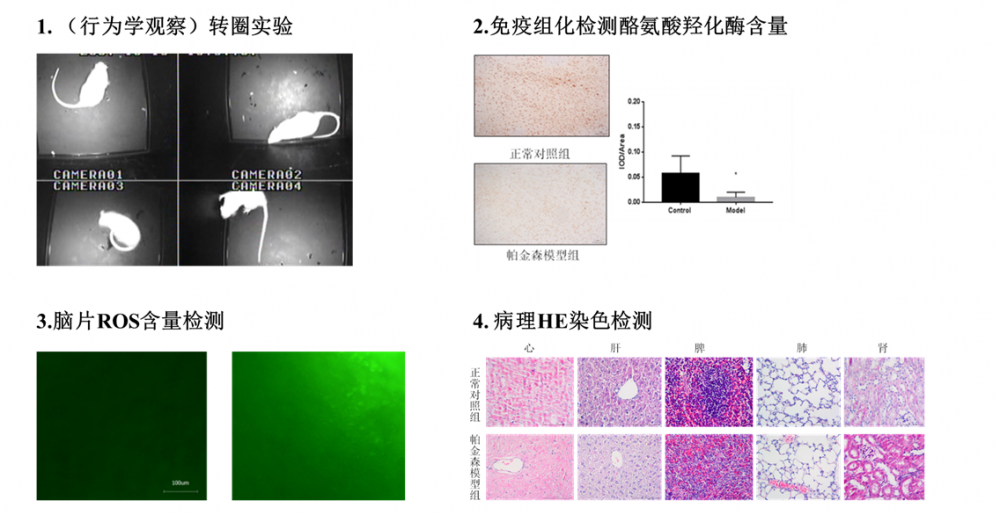
Model Validation: