


Scientific Battle Against Hypertension: Breakthroughs in New Drug R&D for 2025, These Targets Emerge as Key Focal Points
Hypertension, as one of the most prevalent chronic diseases globally, exerts a wide-ranging and profound impact. According to the latest report from the World Health Organization (WHO), approximately 1.4 billion adults worldwide have hypertension. Nearly half of these patients have not been effectively diagnosed or controlled, and many are even unaware of their condition due to the frequently asymptomatic nature of the disease. This contributes to hypertension being a leading cause of premature death.
Source:unsplash
The number of hypertensive patients has surged from 650 million in 1990 to 1.4 billion in 2024, an increase of nearly twofold. This growth is primarily concentrated in low- and middle-income countries, largely driven by an expanding aging population. This trend is particularly pronounced in China. The widespread prevalence of hypertension and the current state of inadequate control pose severe ongoing challenges to global public health, simultaneously driving continuous efforts in drug research and development to seek safer and more precise therapeutic solutions.
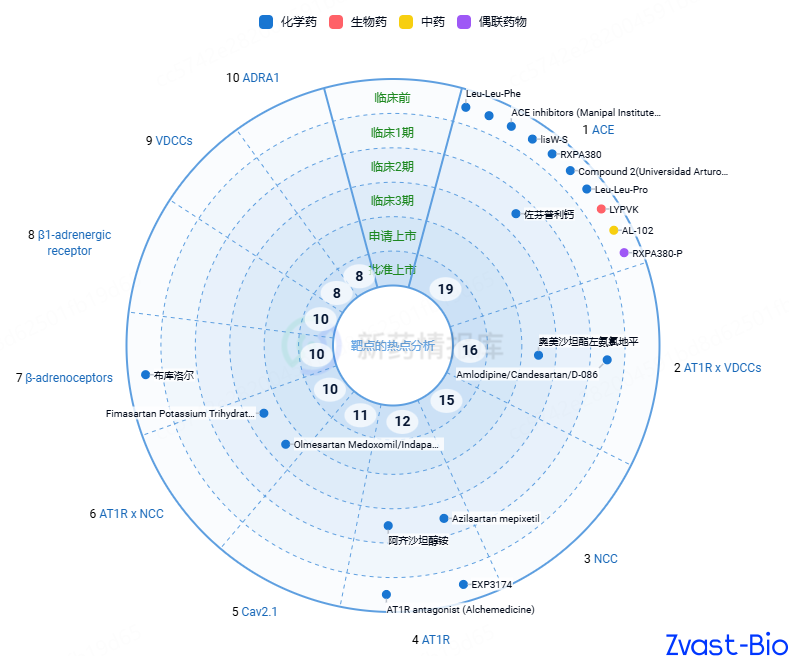
Current research on hypertension treatment focuses on three major targets: ACE, AT1R×VDCCs, and NCC.
Source:synapse.zhihuiya
Angiotensin-I-Converting Enzyme (ACE) is a crucial zinc metallopeptidase that plays a central role in blood pressure regulation by converting angiotensin I into angiotensin II, a potent vasoconstrictor. Currently, drugs targeting ACE are mainly categorized into inhibitors and modulators, which lower blood pressure by interfering with this conversion process.
Type 1 Angiotensin II Receptor (AT1R) serves as the primary mediator for the actions of angiotensin II. Binding of angiotensin II to AT1R triggers a series of responses including vasoconstriction, elevated blood pressure, myocardial hypertrophy, and aldosterone secretion, all of which contribute to maintaining baseline blood pressure and cardiovascular function. An innovative dual-targeting strategy simultaneously antagonizing AT1R and blocking calcium influx through voltage-dependent calcium channels (VDCCs) can more comprehensively intervene in the pressor pathway, thereby exerting a synergistic blood pressure-lowering effect.
In the kidneys, the Sodium-Chloride Cotransporter (NCC) is responsible for the reabsorption of approximately 5%-10% of sodium and chloride ions in the distal convoluted tubule, playing a vital role in body fluid and electrolyte balance. Drugs targeting NCC provide a novel therapeutic approach in antihypertensive treatment by precisely inhibiting its function to promote sodium salt excretion, directly acting on the renal sodium excretion mechanism.
Within the body's intricate blood pressure regulatory system, these three key targets function like "control valves." ACE acts as the upstream "core manufacturing plant," responsible for producing the potent vasoconstrictive signal—angiotensin II. Related inhibitors achieve blood pressure reduction by limiting production at the source. The Type 1 Angiotensin II Receptor serves as the "core receiving switch" for these signals. Novel dual-targeting drugs not only block this switch but also simultaneously inhibit the cooperating VDCCs, achieving dual precise interception. NCC, on the other hand, functions like a "fine-tuning water valve" in the kidneys, controlling sodium and water reabsorption. Its inhibitors alleviate overall systemic pressure by appropriately promoting water and sodium excretion.
These three targeting strategies, focusing on the "production, reception, and regulation" stages respectively, collectively form the cornerstone of modern, precisely controlled antihypertensive therapy.
Good news comes from a domestic research team!
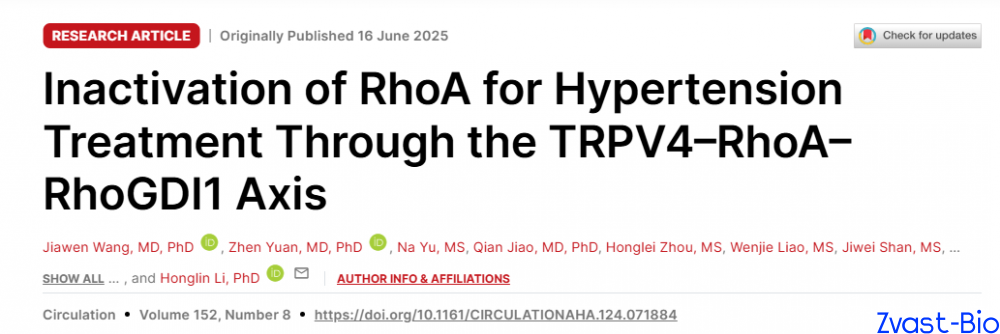
On June 16, 2025, a research team led by Professors Li Honglin and Li Shiliang from East China Normal University, in collaboration with Professor Wang Rui's team from East China University of Science and Technology, published a groundbreaking study titled "*Inactivation of RhoA for Hypertension Treatment Through the TRPV4-RhoA-RhoGDI1 Axis*" in Circulation (Impact Factor > 30), a top-tier international cardiovascular journal. They have identified a novel target for hypertension treatment! The study reveals a new RhoA signal inhibition mode targeting the TRPV4–RhoA–RhoGDI1 axis, offering fresh insights for future antihypertensive drug development and proposing innovative strategies for targeting challenging Rho GTPases.
Source:Circulation
Clinical Pipeline News from Domestic Pharmaceutical Companies Today!
According to data from the Drug Clinical Trial Registration and Information Disclosure Platform, Shenzhen Salubris Pharmaceuticals Co., Ltd. has two new hypertension drugs currently in the clinical stage. These include an ETA-targeting drug (CTR20254965) in Phase I clinical trials, disclosed on December 15, 2025, and an Aldosterone-targeting drug (CTR20254965) in Phase II clinical trials, disclosed on November 25, 2025.
The paradigm for hypertension treatment is quietly evolving. From in-depth optimization of traditional targets to the discovery of novel signaling pathways, and the successive entry of dual-target drugs and new targeted agents into clinical trials—these advancements collectively point towards a future of more precise and personalized therapy. Breakthroughs in research are translating into tangible clinical potential, offering new approaches for the long-term management of hypertension and the reduction of cardiovascular and cerebrovascular risks. Although the journey of new drugs still requires time for validation, these explorations undoubtedly represent a crucial step forward in the fight against hypertension.
Zhonghong Boyuan Hypertension Models
1. Spontaneously Hypertensive Rat (SHR) Model
Modeling: Ten-week-old male SHR rats serve as the model group, with WKY rats as the control group. After a one-week acclimatization period, both groups are raised for an additional 8 weeks before blood pressure measurement is conducted to determine successful model establishment.
Modeling Period: 8 weeks
Treatment Period: 8 weeks
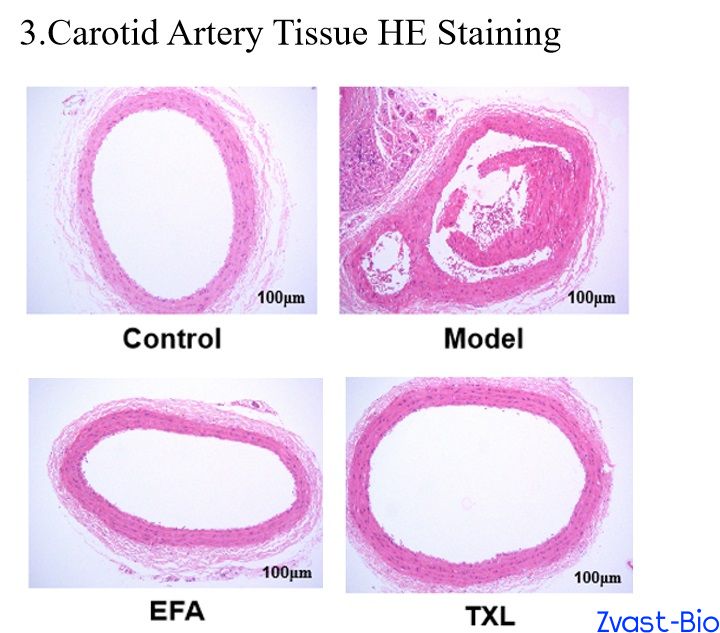
Positive Control Drugs: Candesartan cilexetil, EFA Tongxinluo (TXL)
Model Data

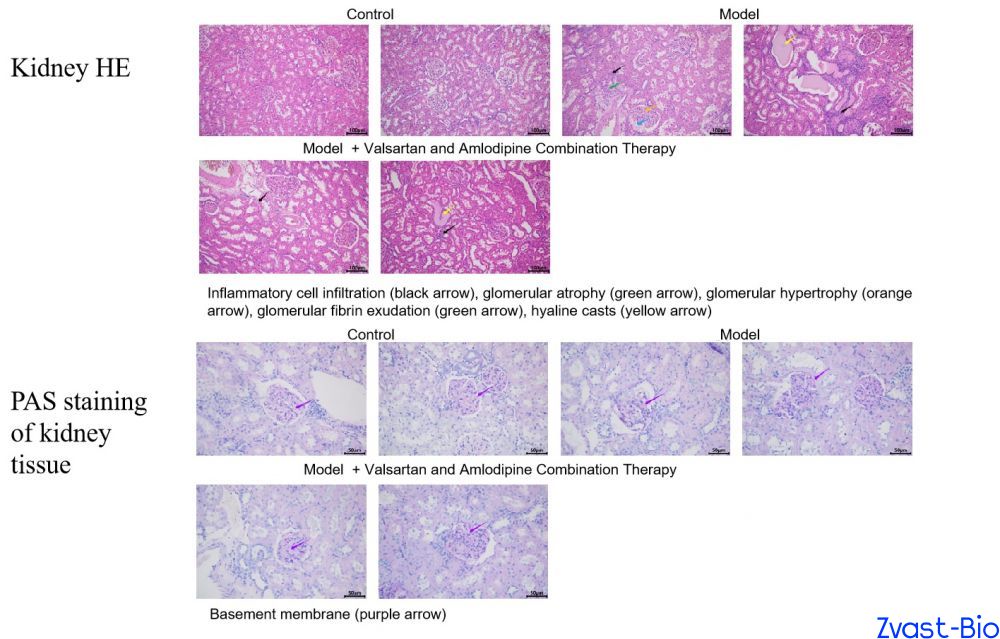
2. DOCA-Salt Induced Secondary Hypertension Model in Uninephrectomized SD Rats
Modeling: SPF-grade SD rats undergo a one-week acclimatization period before modeling begins. The control group receives no treatment. In the model group, animals undergo left kidney nephrectomy surgery on Day 1 (D1). Model animals are administered weekly subcutaneous injections of DOCA (dissolved in olive oil) and provided with NaCl-supplemented drinking water.
Modeling Period: 10 weeks
Treatment Period: 4 weeks
Positive Control Drug: Valsartan/Amlodipine Tablets (a combination drug)
Model Data
References:
1. Stephanie Randar,Diana L. Silva-Velasco,Fernanda Priviero,R. Clinton Webb,RhoA/Rho-Kinase Signaling in Vascular Smooth Muscle and Endothelium: Mechanistic Insights and Translational Implications in Hypertension, Biomolecules, 15, 11, (1607), (2025).https://doi.org/10.3390/biom15111607