Migraine Is Not Something to Endure! Analysis of Novel Targets and Drug Research at the End of 2025
"The head throbs with pain, accompanied by photophobia and phonophobia, leaving even no strength to open the eyes."
"It strikes like clockwork during menstruation, so painful that I feel like vomiting"...
If you’ve ever experienced this, you’re likely plagued by migraine. To many, migraine is just a "common headache" that can be endured, but the reality is far more serious—it is a "silent agony" affecting over 3 billion people worldwide, and the third leading cause of Disability-Adjusted Life Years (DALYs) globally, second only to stroke and neonatal encephalopathy.

Source: chiro
Migraine is a common chronic neurovascular disease, characterized by recurrent unilateral throbbing pain of severe intensity. It is often accompanied by autonomic dysfunction symptoms such as nausea, vomiting, photophobia, and phonophobia, with episodes lasting 4-72 hours, seriously impacting patients’ work, study, and social life. Its pathogenesis is not caused by a single factor but by the combined effect of genetics, endocrine, environment, mental state, and other multiple factors.
Long-term neglect of treatment can lead to severe complications such as status migrainosus and migrainous infarction—migraine is by no means "something to endure."
For a long time, the pathogenesis of migraine has been a focus of medical research. Traditional views hold that it is closely related to neurotransmitter imbalance (e.g., serotonin, calcitonin gene-related peptide [CGRP]) and abnormal vasomotor function. With the deepening of research, more complex multi-pathway mechanisms have been gradually revealed. In particular, a number of recent studies have provided a new perspective for understanding the pathophysiological process of migraine.
Novel Targets!!!
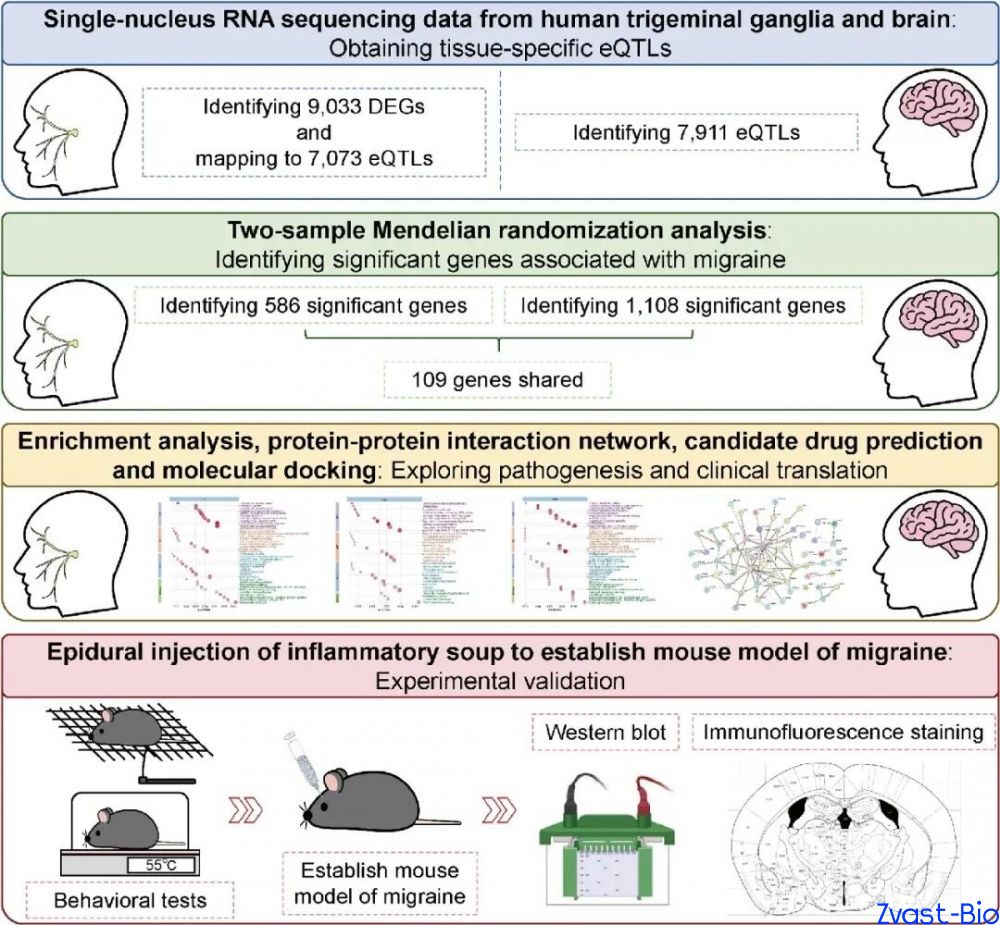
In December 2025, Professor Liu Lu’s team from Beijing University of Chinese Medicine Affiliated Beijing Hospital of Traditional Chinese Medicine published an article entitled "From trigeminal ganglion to cortex: ATG7 emerges as a key integrator of migraine pathways via multi-omics profiling" online in The Journal of Headache and Pain.
Source: Springer
The study integrated multi-omics datasets to advance migraine research by linking central and peripheral nervous system mechanisms. It emphasized that the ATG7 gene serves as a "key hub" connecting multiple migraine pathogenic pathways. Activating "protective autophagy" (a self-repair mechanism of the body) and promoting collaboration between glial cells and neurons may be potential directions for relieving migraine. This research provides a comprehensive understanding of migraine pathogenesis and highlights autophagy as a promising therapeutic target.
On December 3, 2025, at the 19th European Headache Congress (EHC 2025) held in Lisbon, Portugal, Professor Xiao Zheman’s team from Renmin Hospital of Wuhan University announced three major findings!!!

Source: ehf-headache
Glymphatic dysfunction may exacerbate migraine—simply put, malfunctions in the brain’s "waste clearance system" can worsen headaches, and the AQP4 protein may be a breakthrough point to address this issue;
SS-31 can alleviate IS-induced pain responses and mitochondrial dysfunction, an effect that can be partially blocked by inhibiting Sirt3 and Pgc-1α. SS-31 is expected to become a headache treatment drug, and the Sirt3/Pgc-1α pathway may serve as an important target for its intervention;
Inhibiting PAC1 receptor internalization can effectively improve allodynia in rats with chronic migraine by blocking ERK signaling pathway activation. Regulating receptor internalization may provide a new perspective for exploring the specific mechanism of PACAP signal activation in the trigeminovascular system.
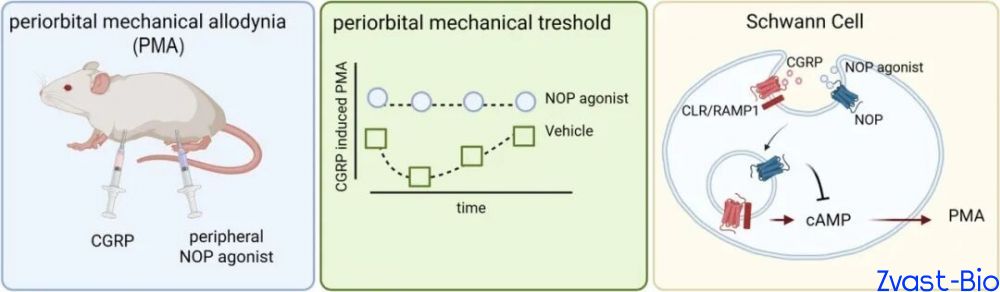
The team led by Professor Chiara Ruzza from the University of Ferrara, Italy, published a paper entitled "Activation of peripheral NOP receptors reduces periorbital mechanical allodynia evoked by CGRP in mice" in British Journal of Pharmacology. The study proposed that previous centrally penetrating NOP agonists are often associated with adverse reactions such as drowsiness, while the peripherally restricted compound UFP-112 avoids such side effects by not crossing the blood-brain barrier. This provides a direction for the future development of novel migraine therapeutics with higher safety.
Source: bpspubs
Breakthroughs in mechanism research have paved the way for new drug development. Recently, the latest research results from multiple pharmaceutical companies have brought new hope to patients!
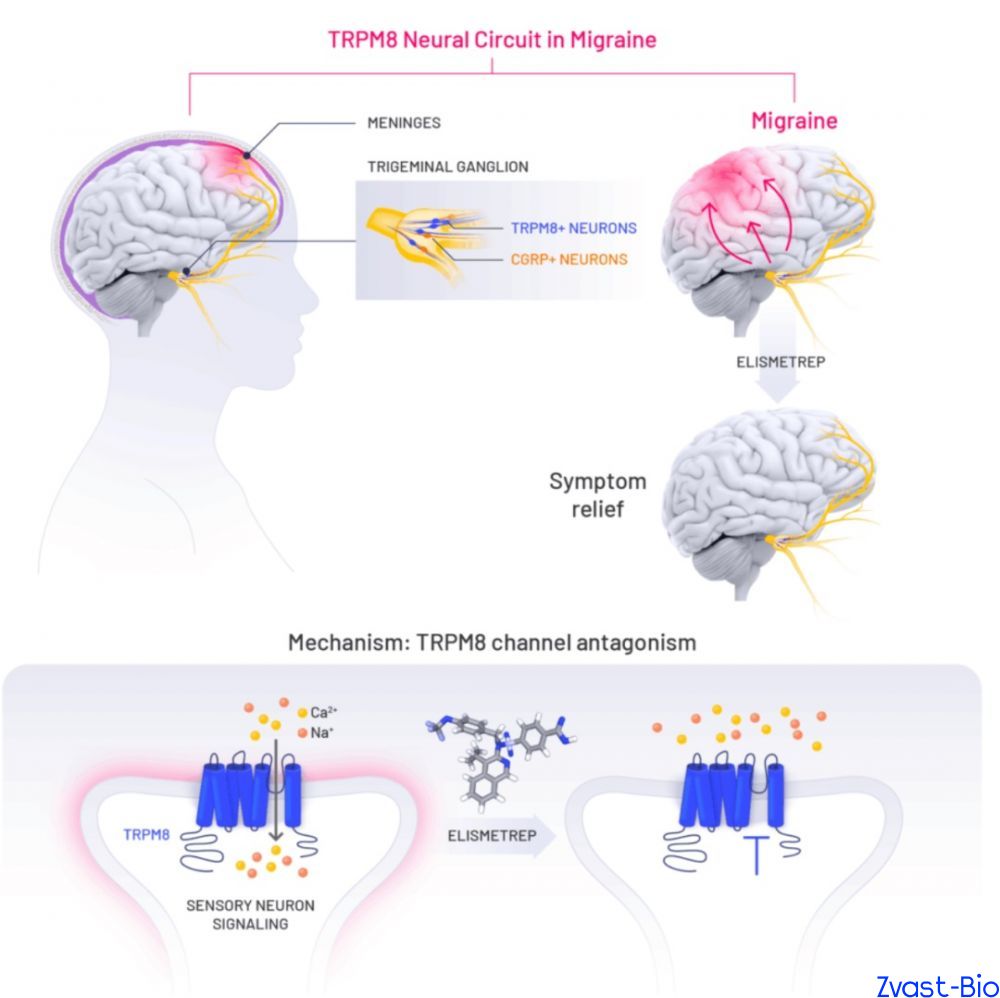
US-based Kallyope announced positive results from a Phase 2b clinical trial of elismetrep, an oral TRPM8 antagonist, for the acute treatment of migraine. The study enrolled 431 US patients aged 18-70 years with a disease duration of ≥1 year and 2-10 monthly episodes. It adopted a double-blind placebo-controlled design with 4 dose-exploration arms, with a treatment cycle of 7 days. Results showed that its primary endpoint (pain freedom rate at 2 hours post-treatment) as well as key efficacy indicators such as pain relief rate and proportion of patients free from the most bothersome symptom were comparable to those of approved therapies, with no adverse safety signals observed.
Source: kallyope
As the first clinically validated TRPM8 antagonist for migraine, this target (expressed in trigeminal neurons innervating the dura mater, with genetic polymorphisms associated with disease risk) is distinct from the mainstream CGRP target. It is expected to fill the unmet clinical need where only 30% of patients respond to monotherapy. The company plans to initiate registration studies in 2026.
In addition, MedStar Research Institute, in collaboration with Pfizer, is conducting a trial of rimegepant sulfate (targeting the CGRP receptor) in adult migraine patients with predictable triggers such as exercise and alcohol consumption. This is a single-center, open-label, prospective study enrolling patients aged ≥18 years with a disease duration of ≥1 year. Launched in September 2025, it is expected to be completed in early 2027.
The prevalence of migraine is continuously rising among young people, with the 18-30 age group being the high-risk population. On September 3, 2025, AbbVie initiated a clinical trial evaluating the safety and efficacy of ubrogepant for the acute treatment of migraine in children and adolescents. The drug is already approved for adult treatment; this study enrolls 6-17 year-old subjects, divided into a pharmacokinetic cohort and a main study cohort.
Overall, migraine drug research is moving towards stronger targeting, longer-lasting efficacy, and higher safety. In the future, with in-depth understanding of migraine pathogenesis, more innovative drugs and treatment methods are expected to emerge, bringing better therapeutic options for patients.
Zvast biotechnology Migraine Models
1. Reserpine-Induced Chronic Migraine Model in Mice
Model Establishment: ICR mice (male, 4-5 weeks old, 20-22 g) were used. After adaptive feeding, the blank control group was subcutaneously injected with 0.9% sodium chloride solution in the back, while the model group was subcutaneously injected with reserpine injection. The first day of injection was recorded as D1, and injections were continued for 10 consecutive days until D10.
Modeling Cycle: 10 days
Treatment Cycle: 10 days
Positive Drugs: Zhentian Pill, ibuprofen
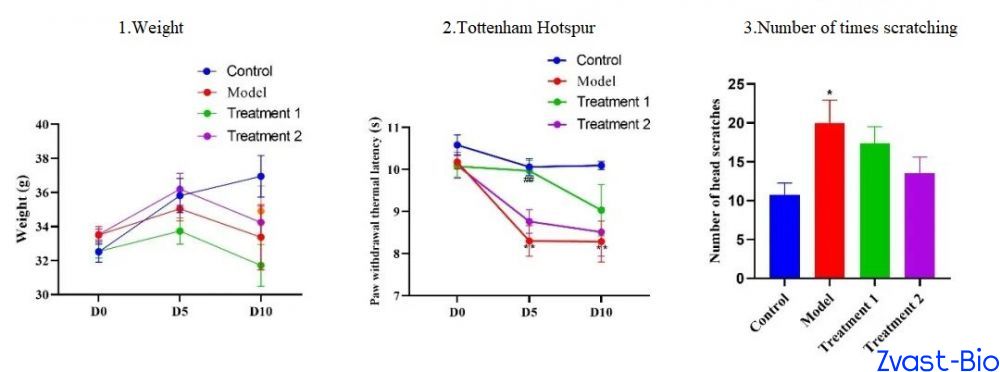
Model Data