The“Brain Eraser”Unlocked:Alzheimer’s--Not Just a Brain Disease,But a Systemic One!
Forgetting words just spoken, failing to recognize familiar faces, getting lost as soon as stepping out... Alzheimer’s disease (AD), known as the "brain eraser", is plaguing over 50 million patients worldwide. In China alone, the number of patients has exceeded 10 million and continues to rise with the intensification of population aging.
AD is not simply "senile confusion", but a progressive neurodegenerative disorder triggered by the abnormal aggregation of β-amyloid (Aβ) and hyperphosphorylation of tau protein. Long-term research and therapeutic efforts focused on intracerebral pathology have yielded minimal progress. Recently, groundbreaking studies published in Ageing Research Reviews and Journal of Prevention of Alzheimer’s Disease have reshaped our understanding: AD is not an isolated brain disease, but a consequence of systemic imbalance. Key systemic factors influencing the disease include gut microecology, chronic inflammation, metabolic status, and vascular conditions.

Image source: Internet
I. AD is Not Merely a "Brain Disease", But a "Systemic Disease"
A study published in Ageing Research Reviews clearly states that AD should be regarded as "a consequence of systemic imbalance", with the "gut-brain axis" serving as the key link connecting the entire body and the brain. Meanwhile, a concurrent study in the Journal of Prevention of Alzheimer’s Disease has confirmed, through an analysis of 40 million real-world medical data points, that AD risk signals emerge in systemic medication patterns as early as 5–10 years before a definitive diagnosis. These signals involve multiple systems, including the respiratory, metabolic, and endocrine systems.

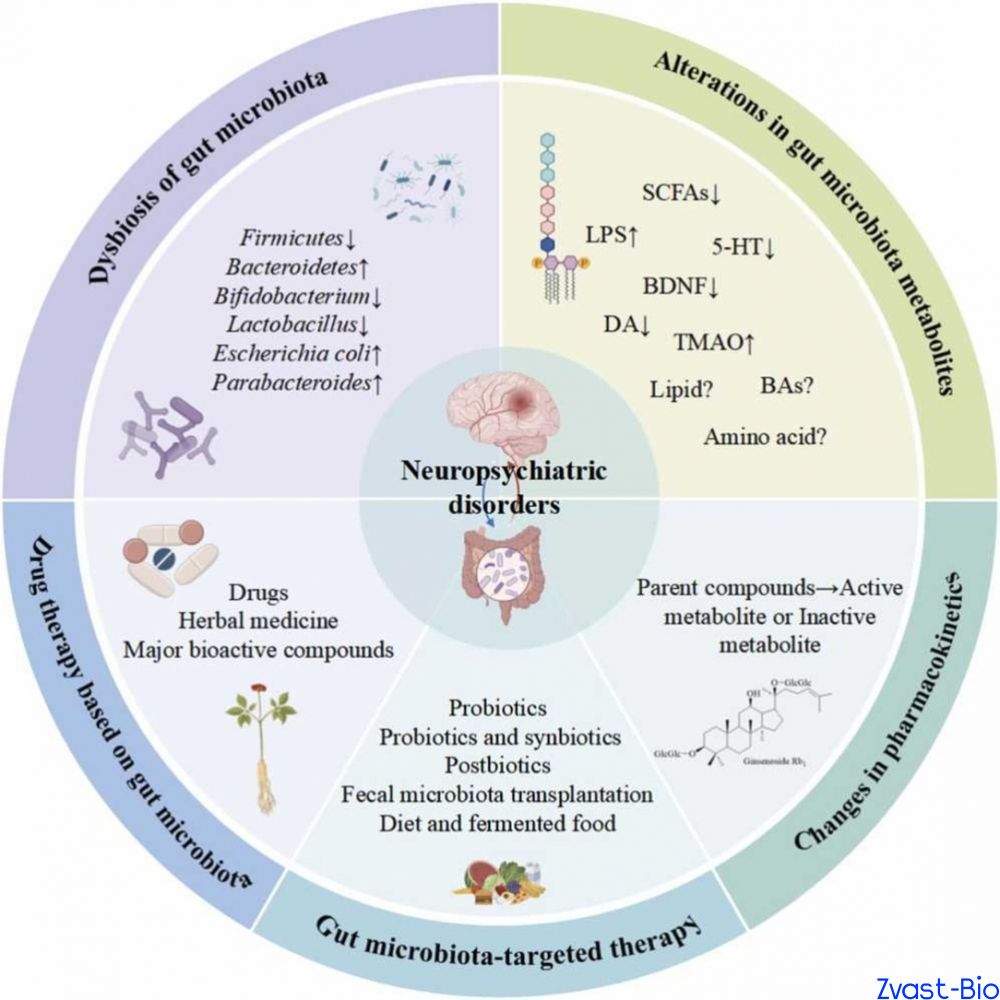
Image source: Journal Official Website
These two studies collectively point to one core conclusion: Brain degeneration does not occur in isolation, but is the ultimate manifestation of the body’s long-term systemic imbalance – including chronic inflammation, metabolic disorders, and barrier impairment. To understand AD, we must break free from the limitation of "focusing solely on the brain" and seek answers from the perspective of the body’s systemic functions.
II. How Does the Gut-Brain Axis Connect the Gut and the Brain?
Since AD is a consequence of systemic imbalance, what is the "communication channel" between the whole body and the brain? The answer lies in the gut-brain axis. Many people perceive the gut and the brain as completely unrelated, but this bidirectional regulatory network has long linked them closely together. Put simply, the gut microbiota, gut, immune system, nervous system, and brain interact with one another through four core pathways – a mechanism that plays a crucial role in the systemic pathogenesis of AD.
1.Intestinal Barrier: The "firewall" against systemic inflammation. A healthy intestinal barrier prevents harmful substances such as bacterial components from entering the bloodstream. Once the barrier is impaired, these "pathogens" trigger chronic low-grade systemic inflammation, which in turn continuously "ignites inflammation" in the brain.
2.Blood-Brain Barrier (BBB): The "gatekeeper" of the brain. Intestinal status can indirectly affect the integrity of the BBB. When the BBB is damaged, peripheral inflammatory factors and toxic substances may infiltrate the brain, disrupting its immune homeostasis.
3.Vagus Nerve: The "information superhighway" for gut-brain communication. As the direct channel connecting the gut and the brain, animal experiments have confirmed that most brain changes induced by gut microbiota are dependent on the vagus nerve. Disruption of this pathway significantly attenuates pathological alterations in the brain.
4.Microbial Metabolites: The "signal messengers" of systemic regulation. Metabolites such as short-chain fatty acids (SCFAs) produced by gut bacteria act as crucial "signal messengers". They not only regulate systemic immune balance and brain neuroinflammation, but also directly participate in physiological processes related to memory and cognition.
More importantly, studies have found that alterations in the gut microbiota often precede intracerebral pathology and cognitive impairment in AD animal models. This suggests that gut microecological imbalance may not be a "consequence" of AD, but one of the "upstream factors" driving disease onset.
III. Clinical Breakthroughs and Emerging R&D Highlights of AD Drugs
For a long time, most AD therapeutics have been symptomatic treatments, which only alleviate symptoms but cannot halt disease progression. In recent years, groundbreaking progress has been made in the R&D of novel drugs targeting AD’s core pathological mechanisms (Aβ deposition and tau tangles). Multiple agents have obtained regulatory approval or entered late-stage clinical trials, bringing hope to patients and gradually ending the predicament of "no effective treatment available" for AD.
Lecanemab and Donanemab, both approved by the U.S. FDA in 2023, act through the core mechanism of clearing accumulated Aβ deposits in the brain. Clinical data demonstrate that these drugs can slow the rate of cognitive decline in AD patients by more than 30% – meaning patients can maintain clear thinking and self-care ability for a longer duration. Domestically, over 30 innovative AD drugs are currently in clinical development, 10 of which are local original research drugs (ORDs). For instance, HRS-7535 developed by Hengrui Medicine exerts its effect by inhibiting Aβ aggregation, with Phase II clinical data showing significant improvements in patients’ cognitive function. Nineve® (Sodium Oligomannate Capsules) from Green Valley Pharmaceuticals is China’s first approved original AD drug and has now entered global multicenter Phase III clinical trials. Its core mechanism is uniquely distinctive: it reduces neuroinflammation in the brain by modulating the gut microbiota, which perfectly aligns with the "gut-brain axis" mechanism we discussed earlier – thus providing an entirely new paradigm for AD treatment.
Treatment Type | Drug Class | Generic Name/Brand Name | Core Mechanism/Target | Developing Company |
Disease-Modifying Therapy (DMT) | Anti-Aβ Monoclonal Antibodies | Aducanumab | Anti-Aβ monoclonal antibody; clears Aβ plaques | Biogen/Eisai |
|
| Lecanemab | Anti-Aβ fibril monoclonal antibody; clears Aβ deposits | Eisai/Biogen |
|
| Donanemab | Anti-Aβ monoclonal antibody; highly effective in clearing Aβ plaques | Lilly |
| Intestinal Microbiota Modulators | Sodium Oligomannate (GV-971, Nineve®) | Modulates the gut microbiota-neuroinflammation axis | Green Valley Pharmaceuticals |
Symptomatic Treatment | Cholinesterase Inhibitors | Aricept | Inhibits acetylcholine degradation; maintains cerebral neurotransmitter levels | Eisai/Pfizer |
|
| Exelon | Inhibits acetylcholine degradation; maintains cerebral neurotransmitter levels | Novartis |
|
| Huperzine A | Inhibits acetylcholine degradation; maintains cerebral neurotransmitter levels | Domestic (China) |
| NMDA Receptor Antagonists | Memantine / Donepezil + Memantine | Modulates glutamate activity (combination therapy enhances efficacy) | Forest/Adamas (Combination Therapy: Eisai/Forest) |
Key Investigational Drugs | Anti-Aβ Aggregation Agents | HRS-7535 | Inhibits Aβ aggregation | Hengrui Medicine |
References:
1. Zhang F, et al. The role of the gut microbiota in neuropsychiatric disorders and therapy. Ageing Res Rev. 2025 Dec;112:102894.
2. Ballard C, et al. Identifying synergistic combinations of repurposed treatments for Alzheimer's Disease. J Prev Alzheimers Dis. 2025 Dec;12(10):100329.
Zvast Animal Model——Alzheimer’s Disease Model
Introduction:Alzheimer's disease (AD) is a neurodegenerative disorder of the central nervous system that occurs in the elderly and pre-elderly populations, characterized by progressive cognitive impairment and behavioral disturbances.
Model Establishment:Six-to-seven-month-old APPswe/PS1ΔE9 transgenic mice were continuously housed for 4 weeks, followed by behavioral tests including the Barnes Maze and Open Field Test. After behavioral assessment, pathological examination of brain tissues was performed, along with detection of the expression levels of amyloid-β 42 (Aβ-42) and neprilysin (NEP).
Positive control drug:Memantine Hydrochloride Tablets, administered via intragastric gavage at a frequency of once per animal per day for 5 consecutive weeks.
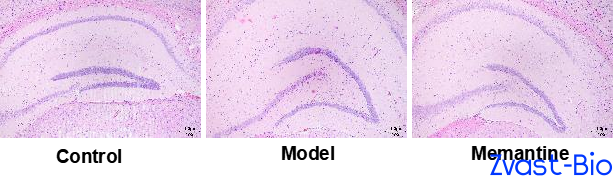
Results indicated:The hippocampal structure in the Normal Group was intact, with no significant neuronal damage observed; In the Model Group, the hippocampal structure showed no obvious abnormalities, while abnormal neurons, characterized by pyknosis and necrosis, were detected in local regions. Cavities were formed around the cells, and significant hyperemia of small blood vessels in the hippocampus was observed; In the Memantine Hydrochloride Group, the number of necrotic neurons in the hippocampus was significantly reduced, and the hyperemia of small blood vessels was improved.
1. Behavioral Test Results


2. Immunohistochemical Results

3. HE Staining